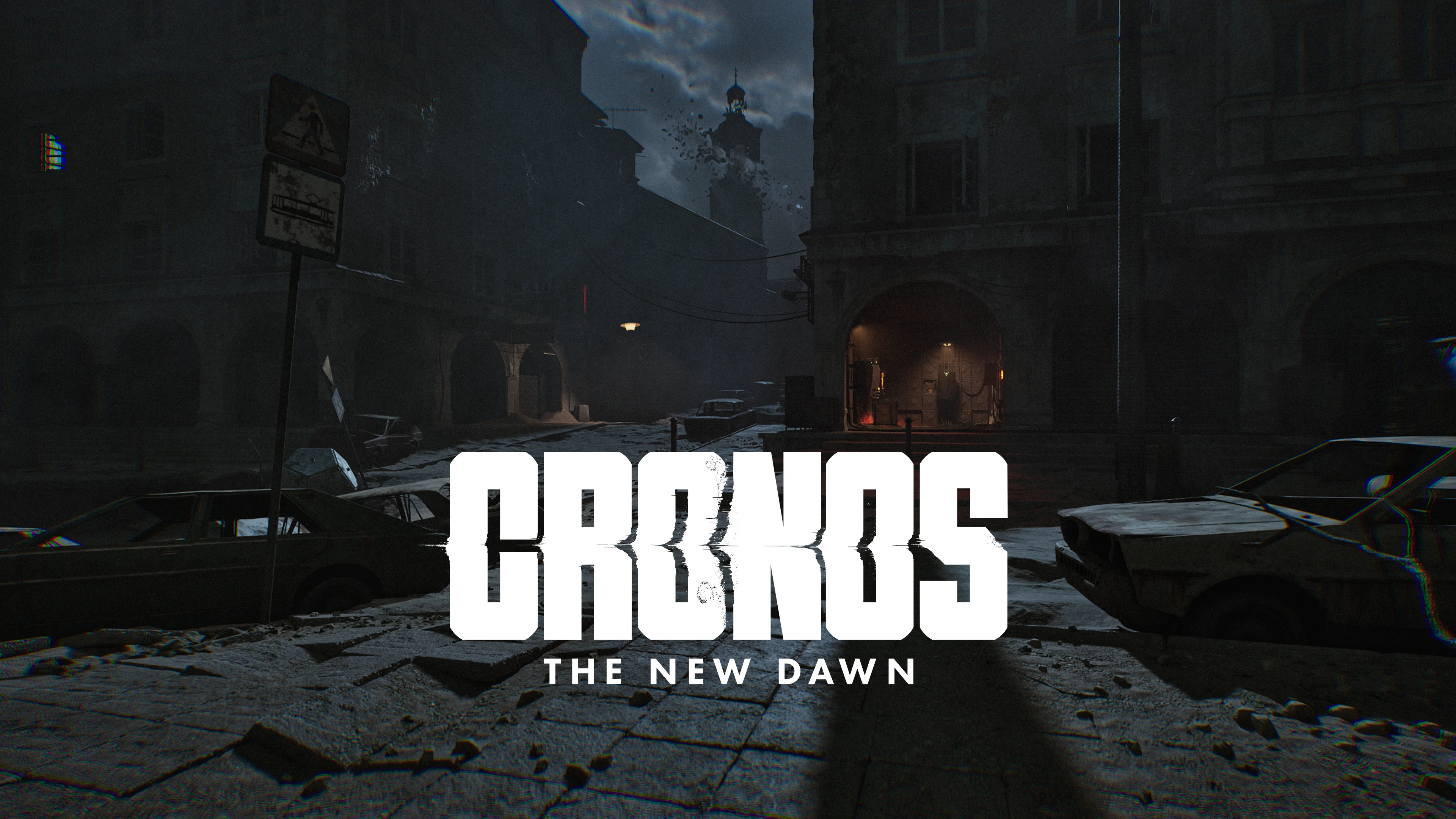
Game description: Cronos: The New Dawn is a brutal third-person survival horror where you fight for the future by salvaging the past. Burn monsters before they merge. Extract souls from the living.
Role: Level Designer

During production, I was lucky to work on two distinct levels: the Abbey and the Town hall, which were designed to give the players different experiences and were very different from one another. Working on them proved to be both thrilling and challenging, as the levels differ greatly in terms of pacing, space composition, and narrative approach.

Abbey is one of the larger levels in Cronos: The New Dawn, which needed to deliver roughly two hours of gameplay. As this level is set in the late stage of the game, players already unlocked all the abilities and tools till that point, so I had to incorporate every mechanic the game has to offer and prepare a worthy challenge that would test the player's mastery. On this level I worked in close collaboration with my team including:
Katarzyna Garlinska and Wojciech Gamracki - Technical QA Testers
Aleksandr Suszczynski - QA Tester
Barbara Gizycka - Narrative Designer
Jan Cieplic and Pawel Krolak - Lighting Artists
Sebastian Chavez - Combat Designer
and many other incredibly talented people.

Narratively this level tells a story of a community gathered together in the abbey to face the end of the world in unity. The protagonist, known in the game as the Traveller, heads to the abbey in the search of the Predecessor, who might hold a key to answering the questions raised by the game's story.
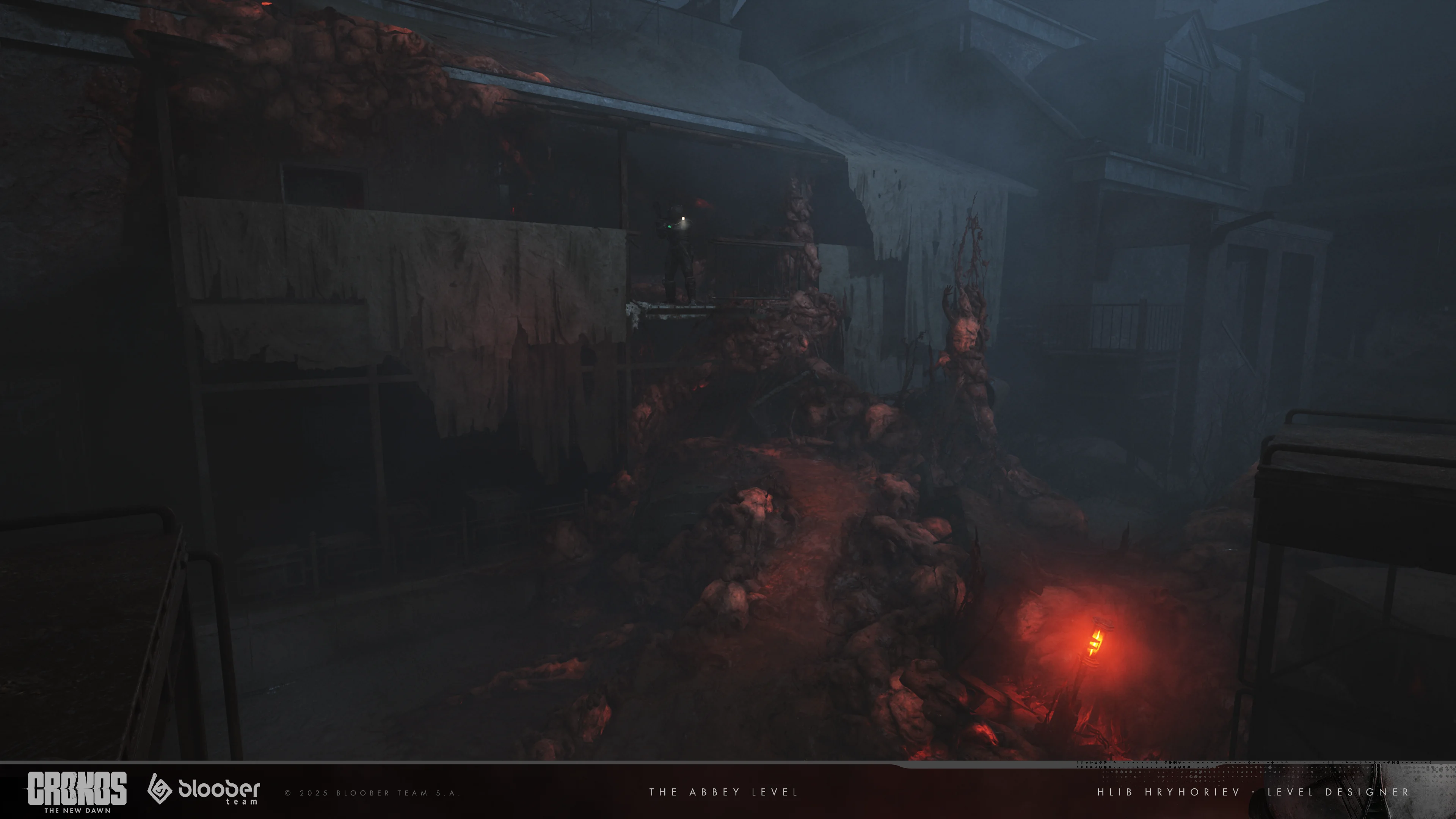
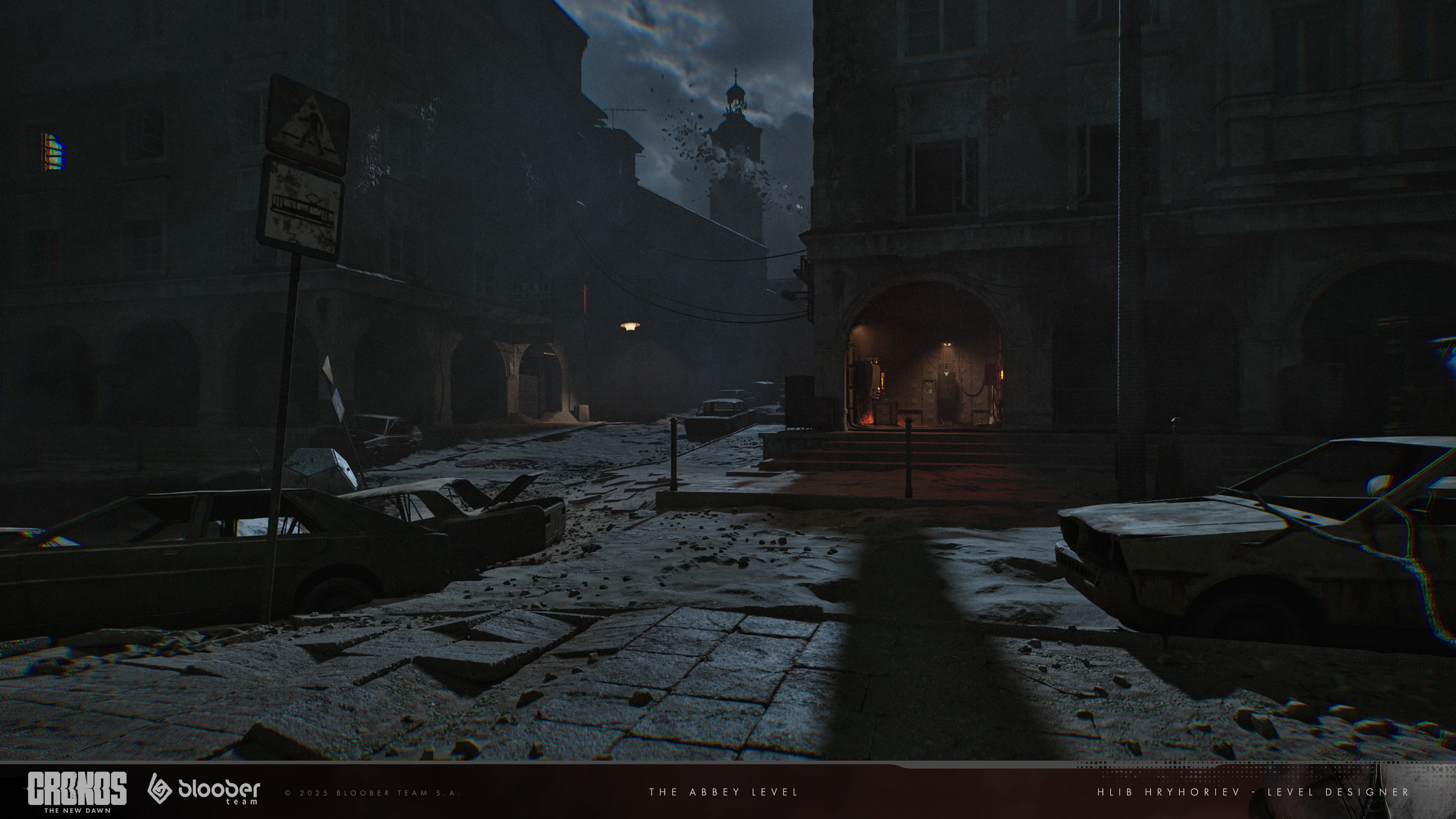
Players arrive to this part of Krakow by tram and then proceed further on foot through the ruined and decayed streets of a city, facing the dangers lurking in the shadows of the abandoned carcasses of apartment blocks.
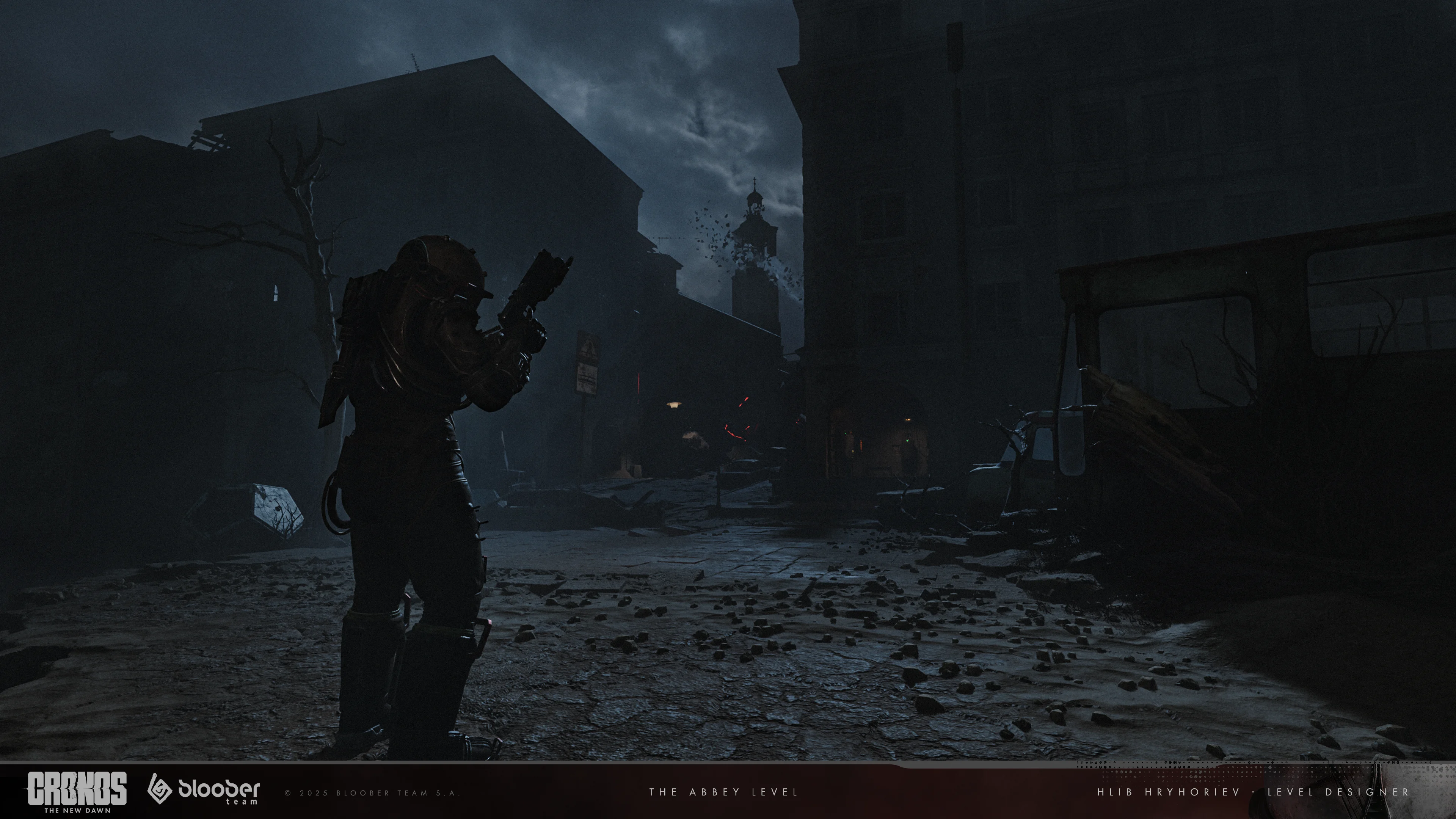
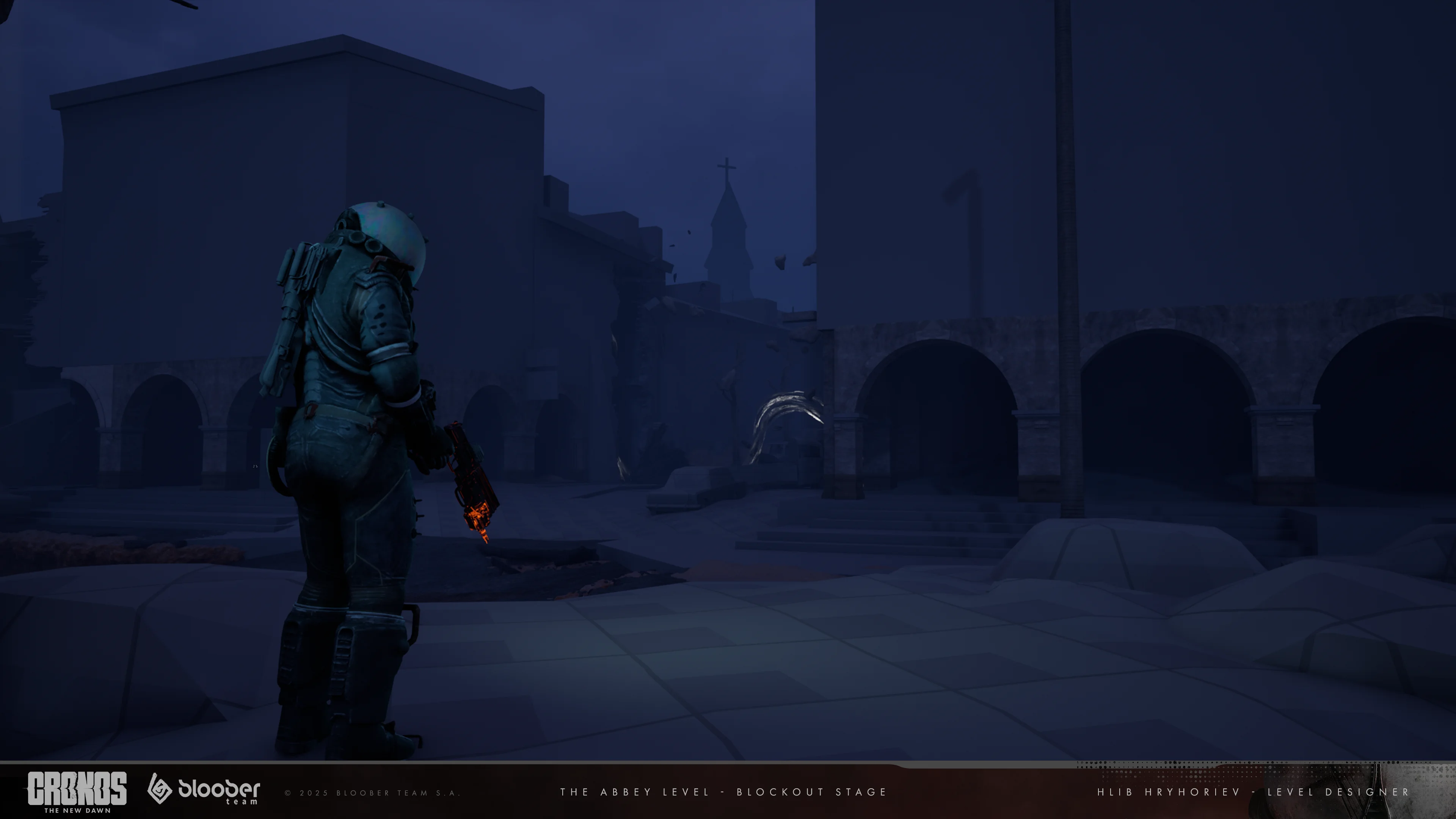
Upon entering the abbey, the Traveller starts hearing a mysterious Voice, a haunting presence that questions the Vocation and her quest. The Voice not only sheds light on level's narrative and foreshadows important story bits, but also messes up with Traveller's perception of reality, showing us the something there is not.
The Predecessor we are after is believed to be inside the sealed church. To open the church's gate, players must explore the abbey grounds and find several old relics to solve a main puzzle of the level. As the Traveller proceeds and ventures deep in the old catacombs beneath, we uncover the dark truth about the Voice and its connection to the events that shaped this place. The path ultimately leads to a climactic boss fight inside the church.
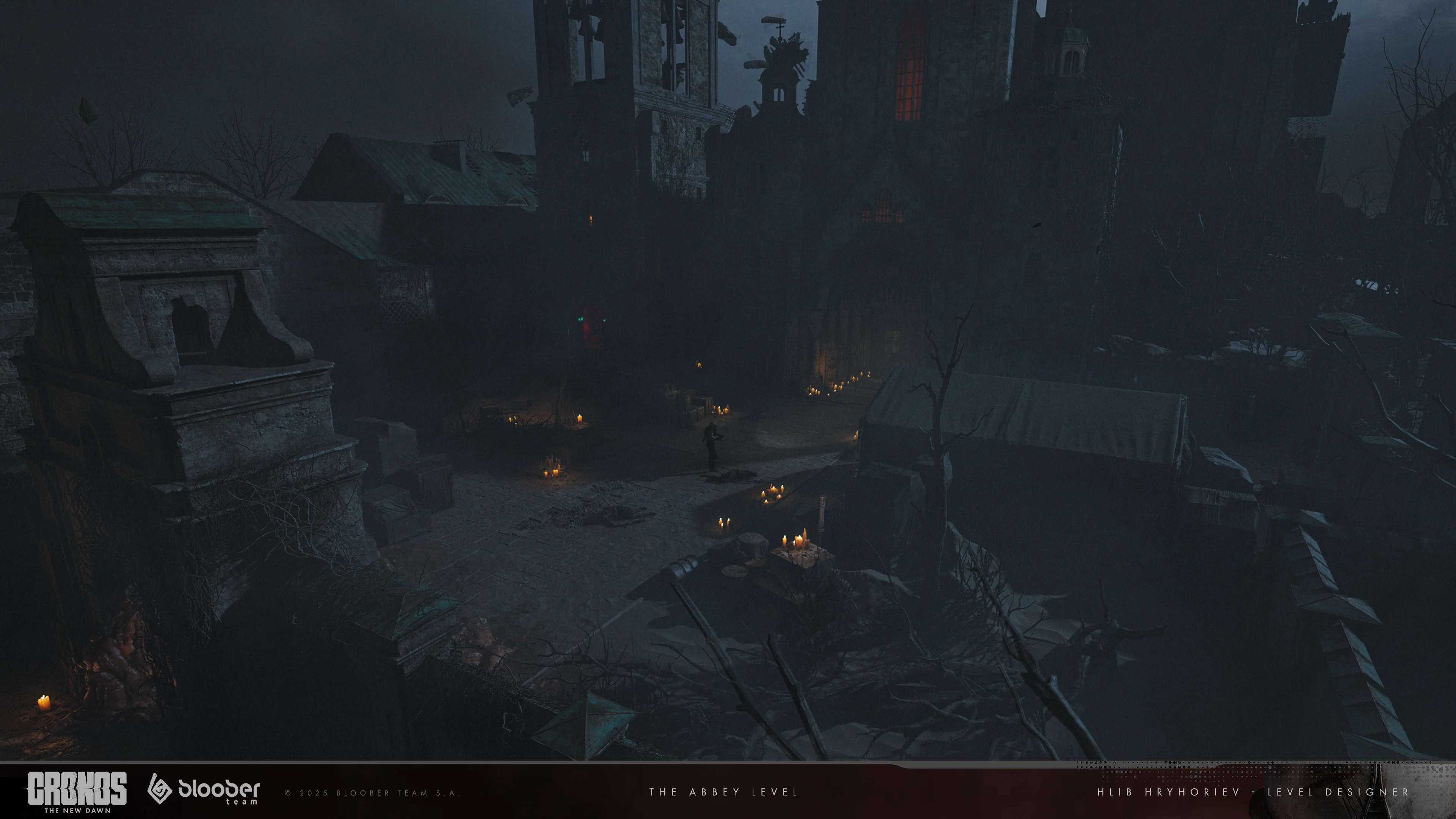
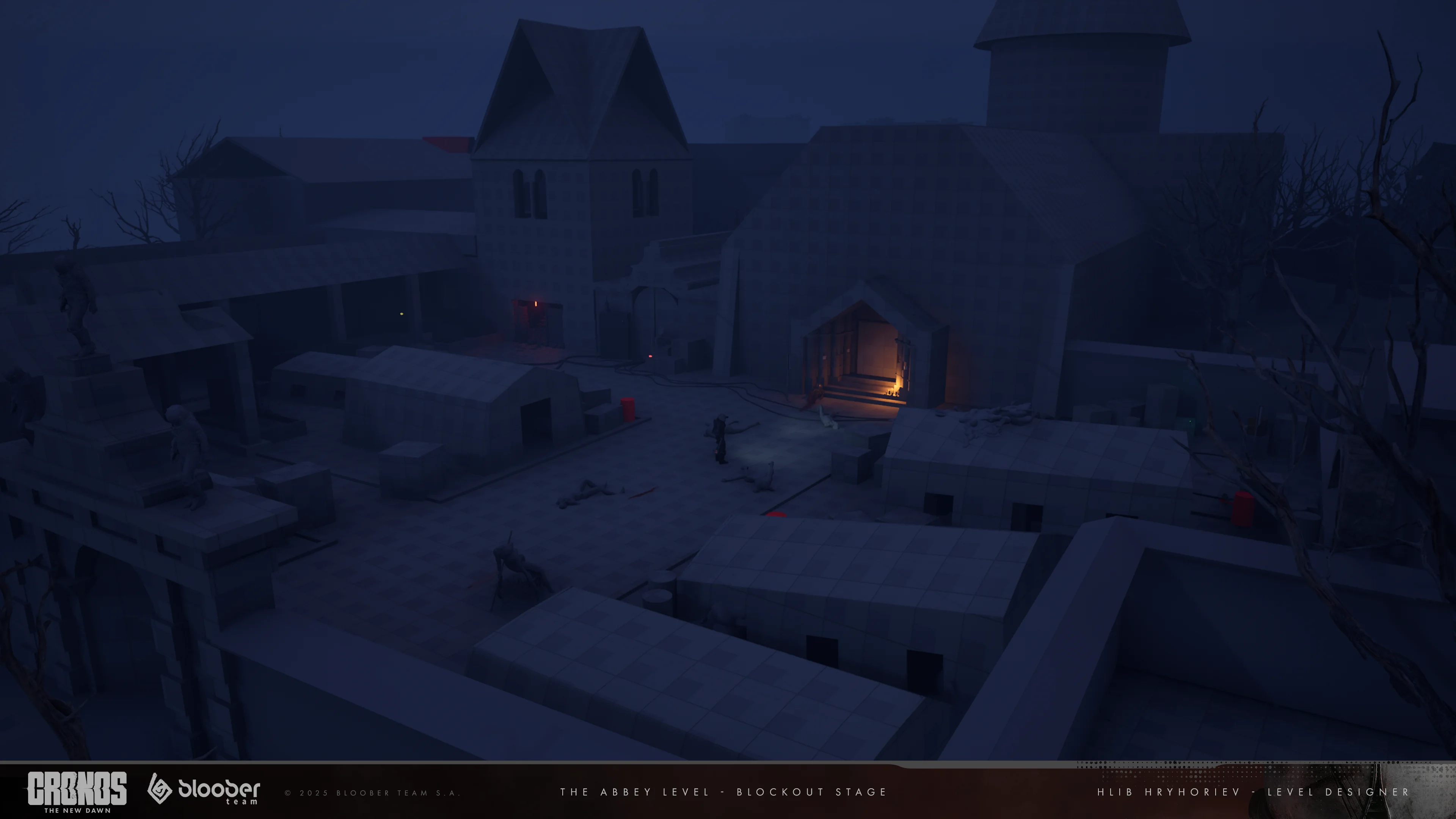

As with any other level, it was really important to thoroughly research the topic and gather a strong reference collection, especially in the case of Cronos, as the game world was heavily inspired by the real Nowa Huta district of Krakow. The abbey level also has its real-life counterpart - Cistercian Abbey Kraków Mogila, also known as the Sanctuary of the Holy Cross.
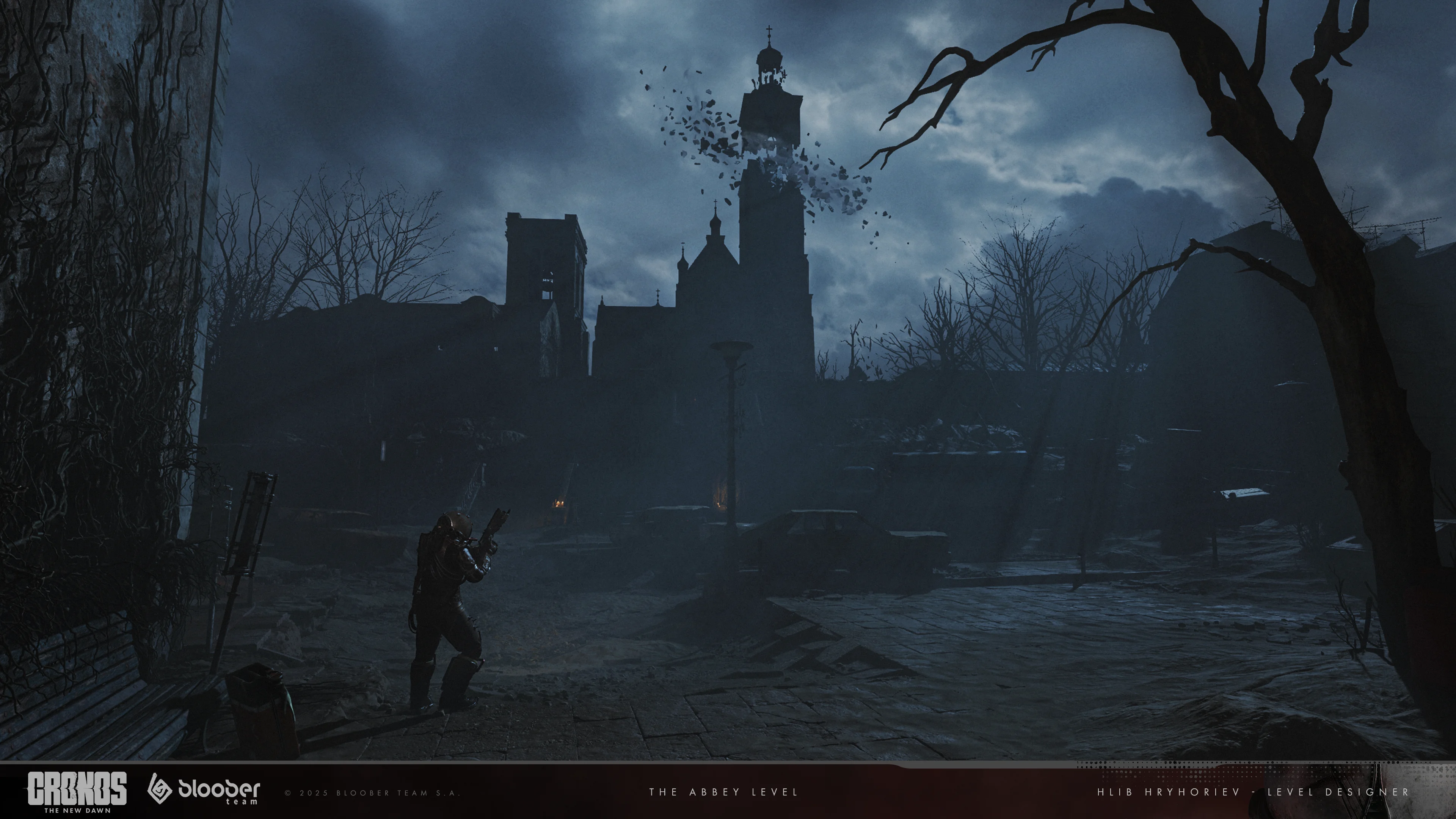
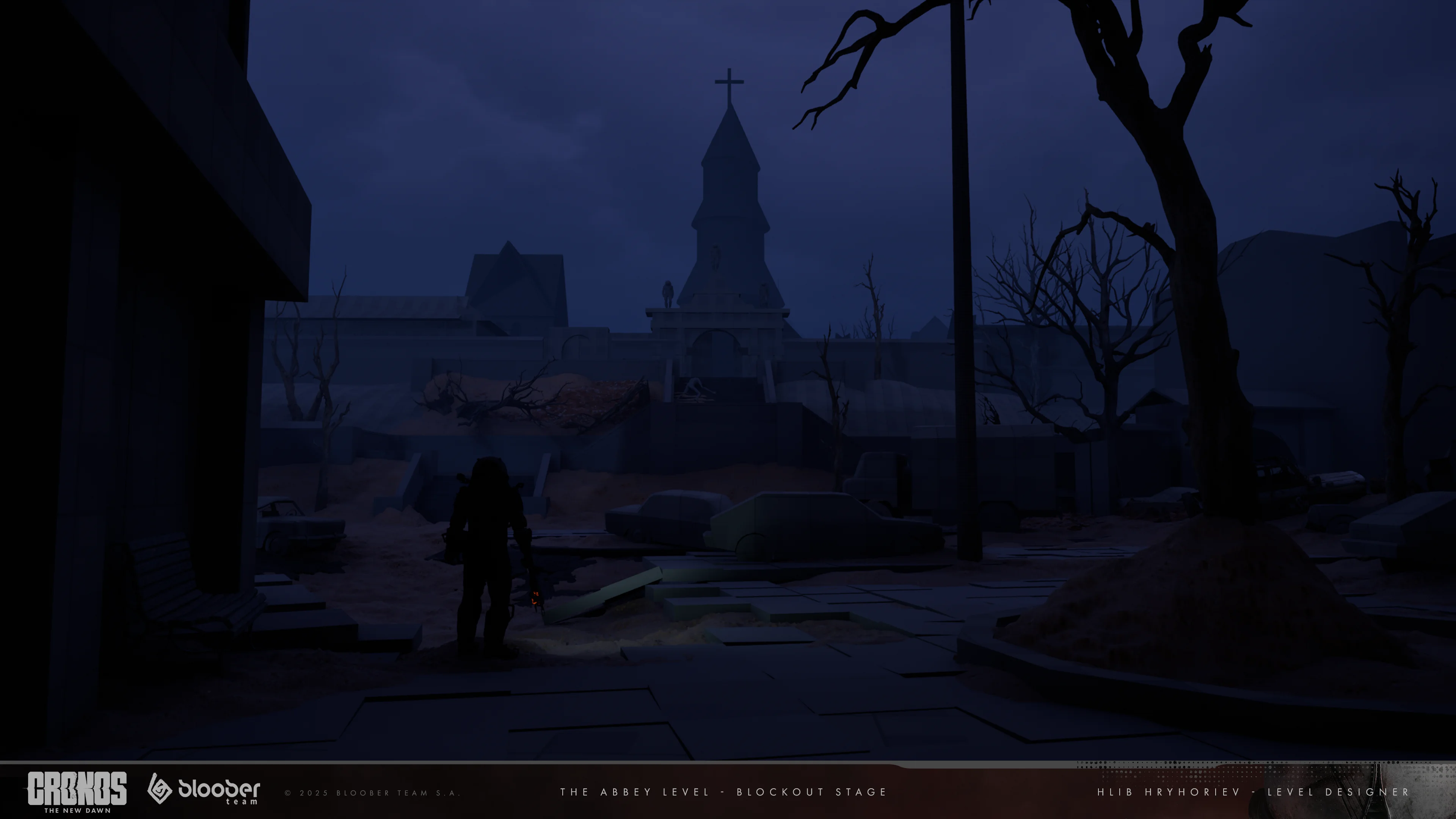
The goal was never to recreate the real abbey one-to-one in the engine, but rather to use it as a guide and historical reference of what could have been there in the Cronos version of Poland in the 1980s. While the inspiration was grounded in reality the size, placement and the layout of the level were adopted to support the gameplay first.

I started designing the level by creating a top-down 2D layout for every major section of the level: the road to the abbey, the abbey grounds and the catacombs beneath. Since this took place pretty early in production, when many systems and constraints were still being defined, I collaborated closely with the team to ensure that the scope of the level is not exceeding what we can do and the level incorporates all gameplay mechanics as effectively as it could.
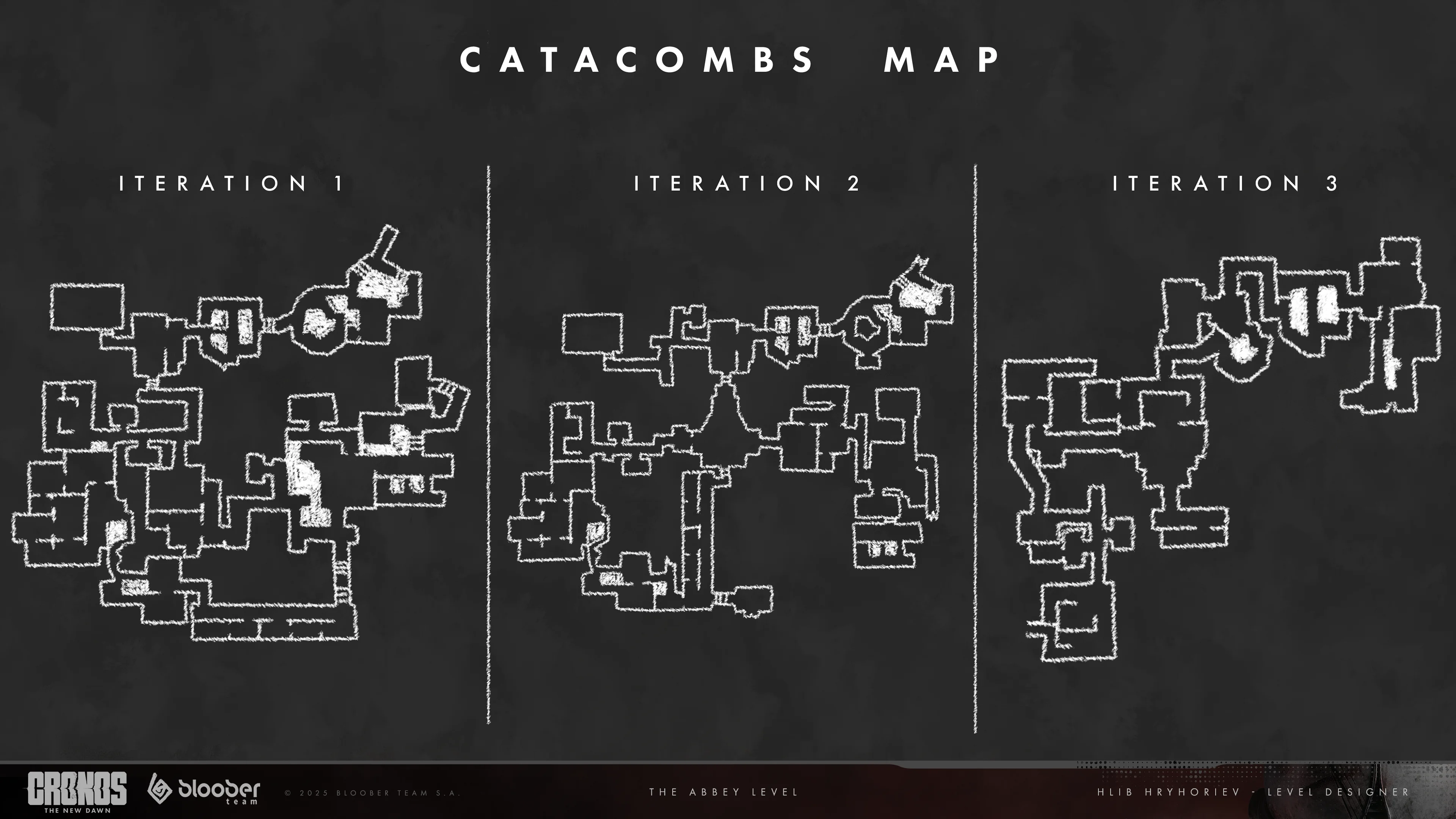
During this stage, outside of planning out the flow and how to incorporate gameplay mechanics, I also focused on introducing spatial contrast to the gameplay space to avoid a homogeneous experience. I wanted to have enough room to play with shapes, composition and gameplay during blockout, so that the level keeps players engaged. Once the ideas behind 2d maps were honed in I was ready to proceed with a level blockout.
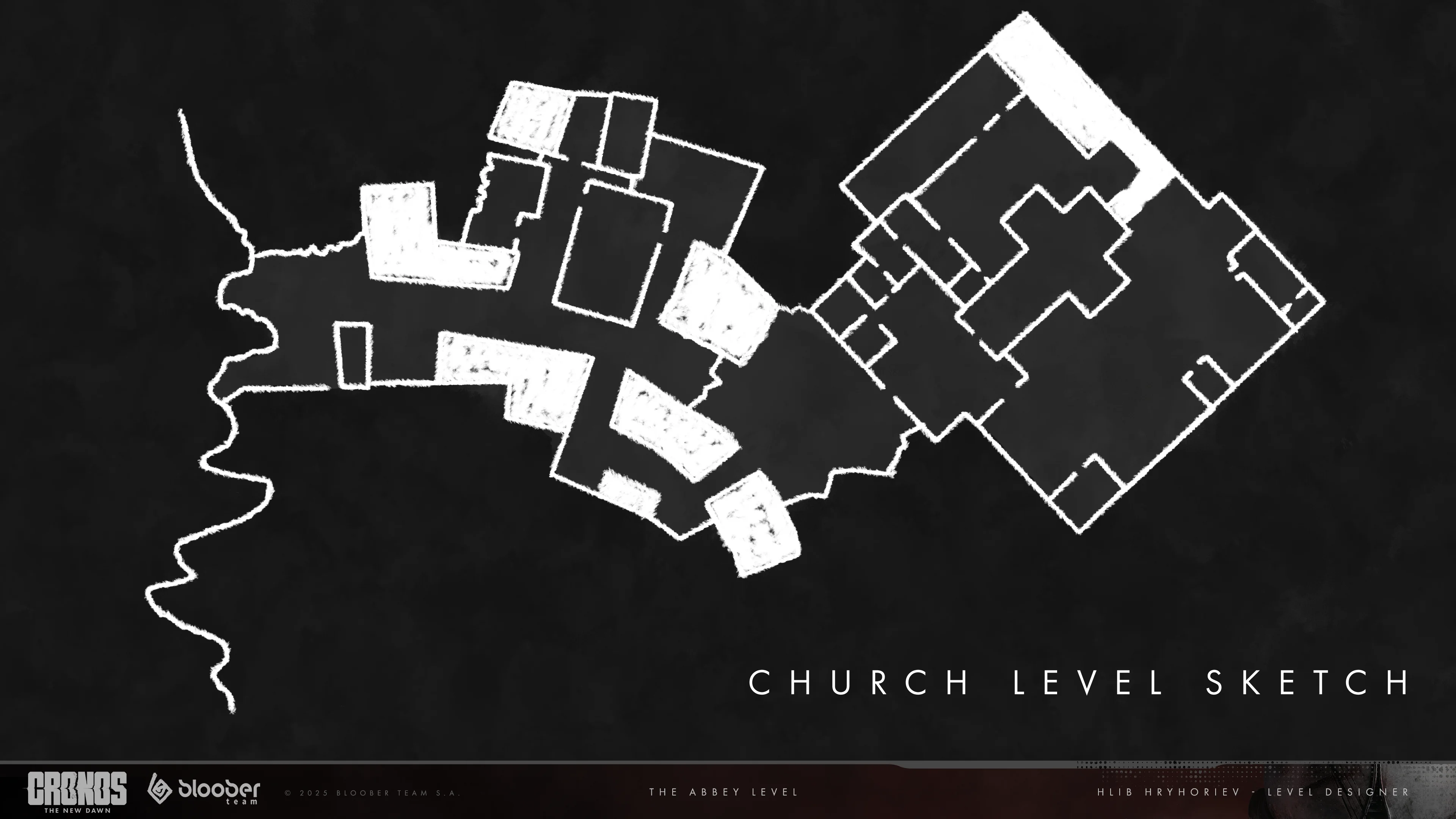
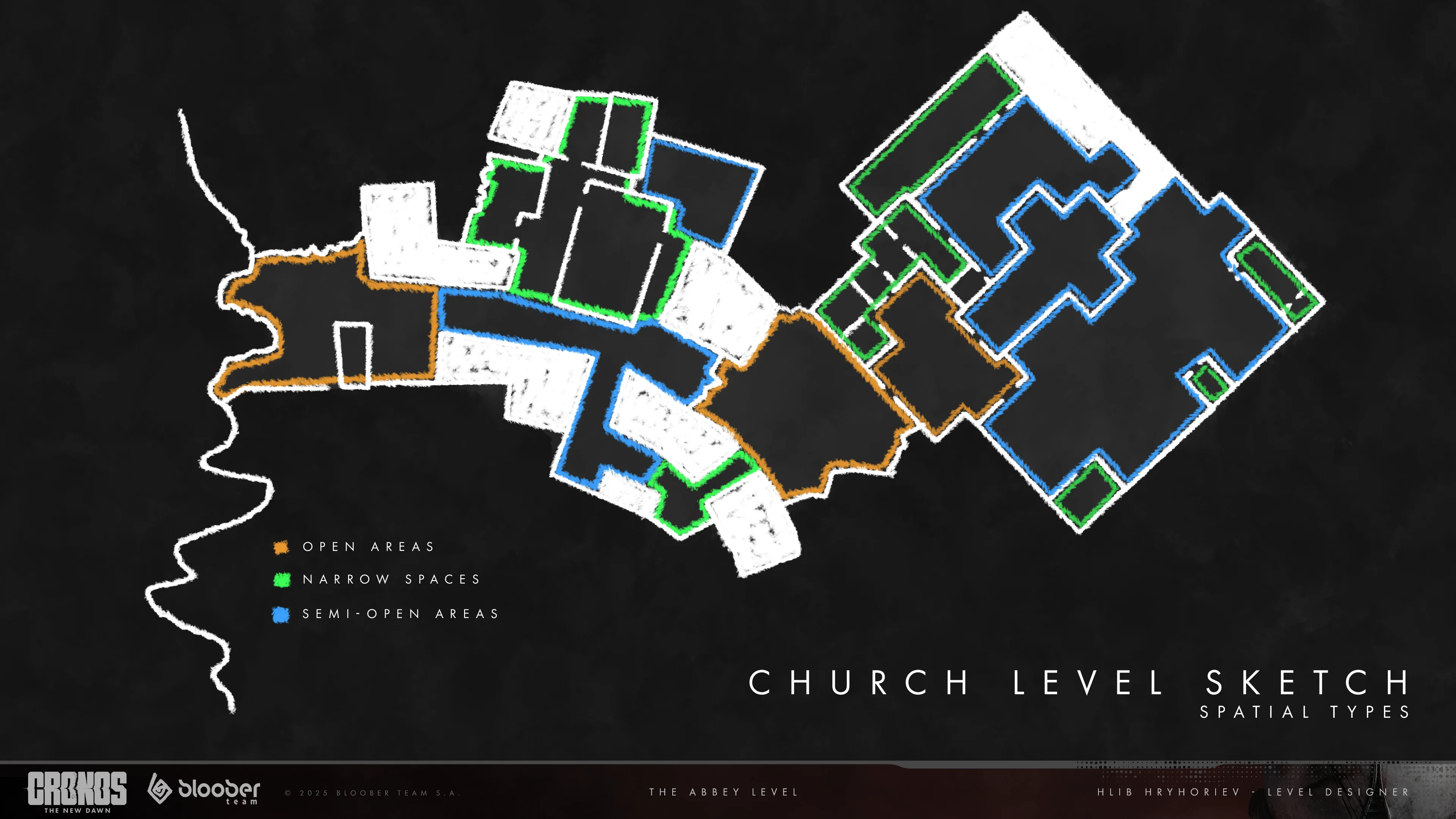
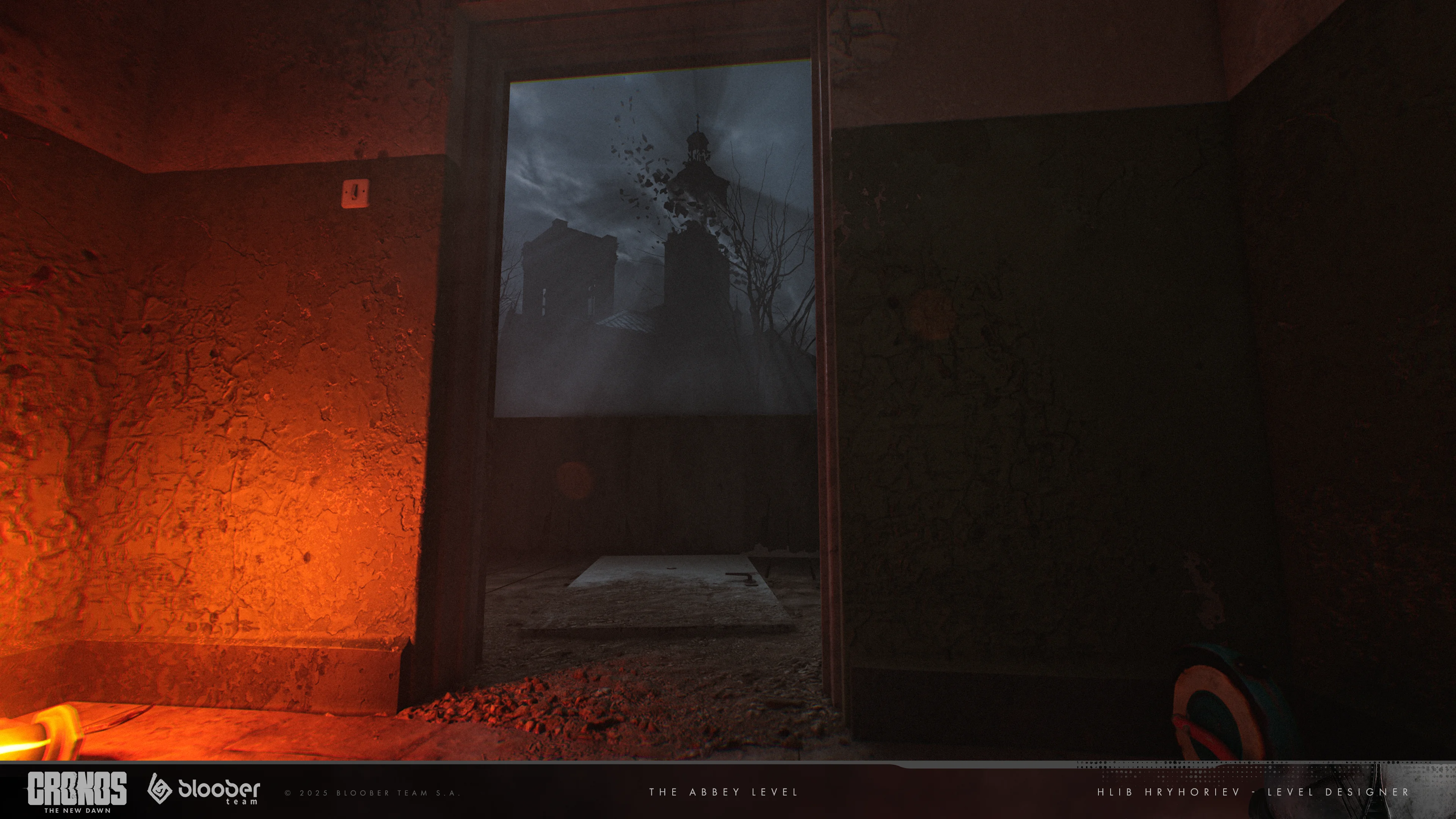
One of the core challenges I tackled early on was establishing a strong sense of direction and visual goal-setting. I designed the layout so that a church building served as a major landmark and remained visible from multiple angles during the player's approach to the abbey. This approach gave a sense of direction in the windy streets and complex interior spaces while building anticipation as the player progressed.
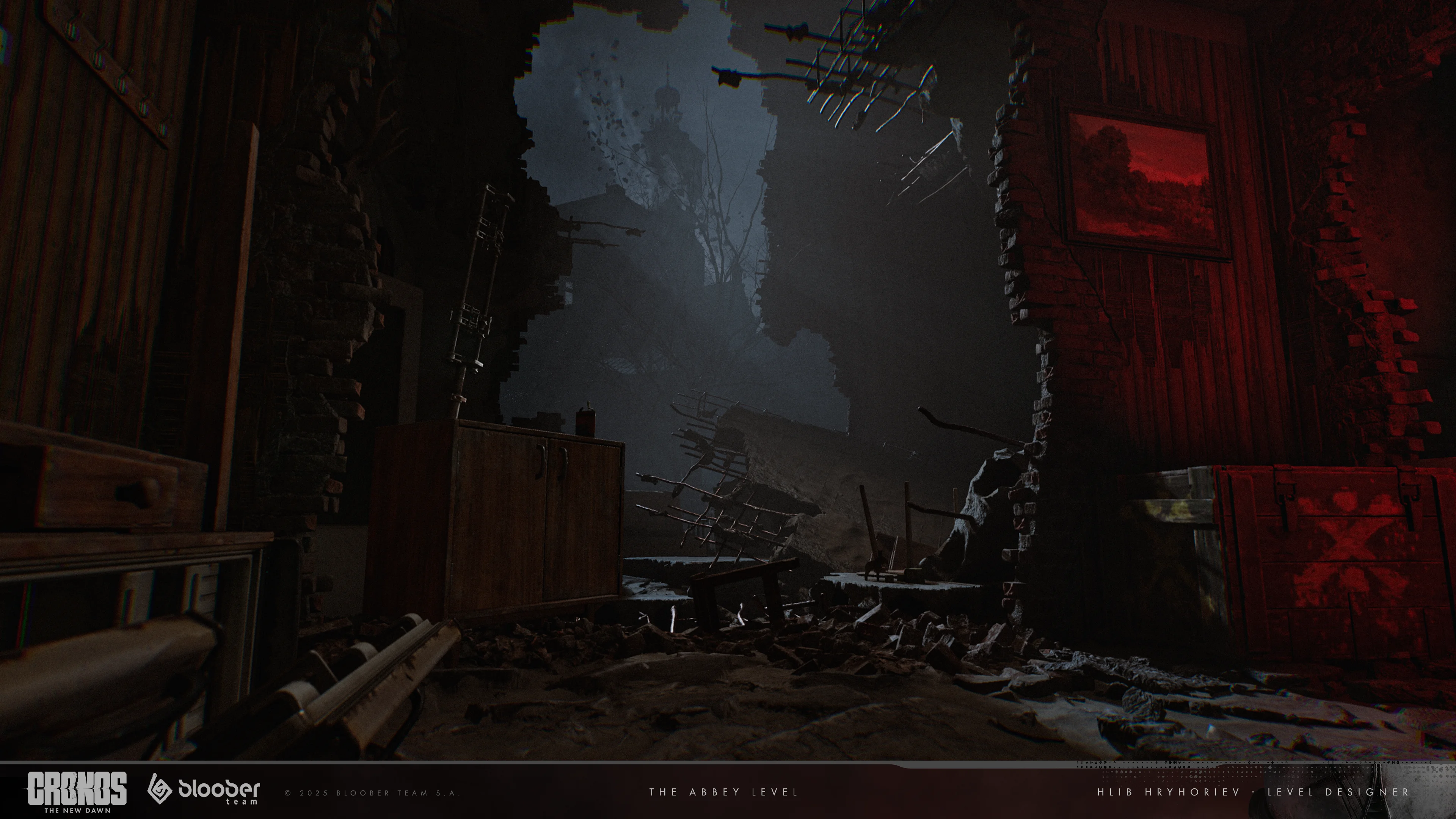
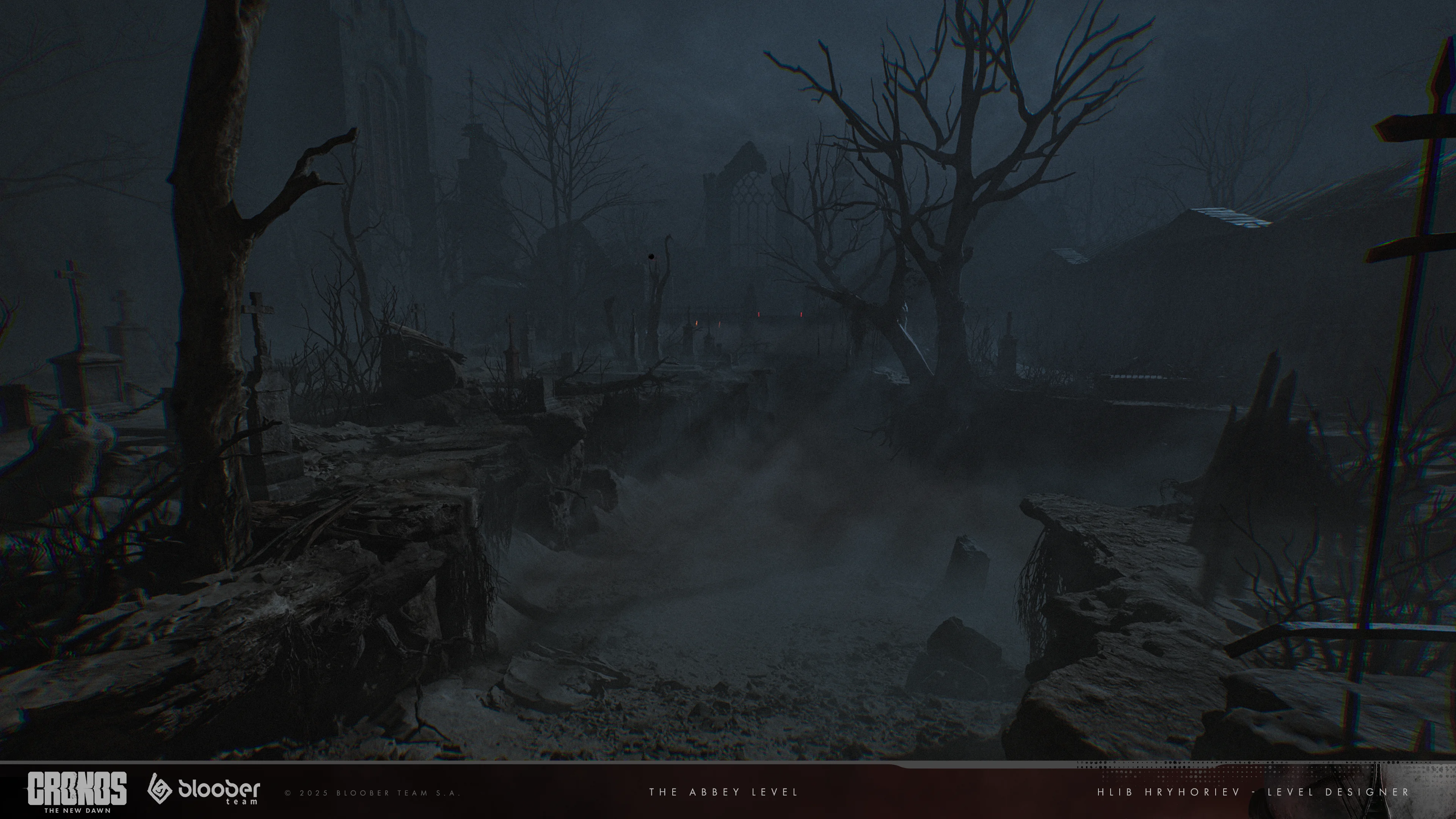
Due to the scale of the location, the abbey itself is divided into three areas: public area open for the visitors, the inner courtyard for the servants of God and a familiar horror staple - an old cemetery. In this way, traditionally for survival horrors, the level opens up gradually, while unique zones tell a different story and vary in the atmosphere.
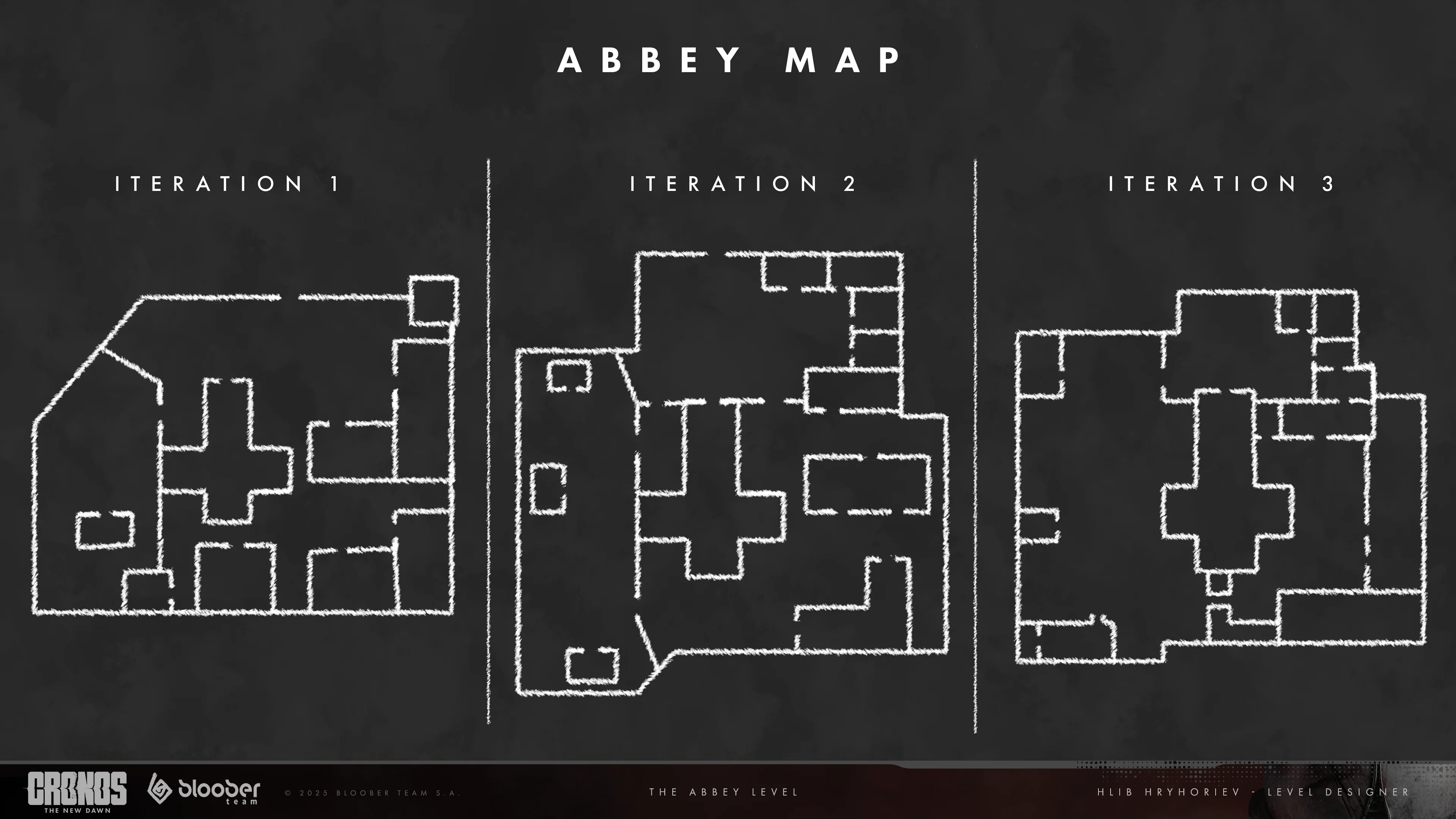
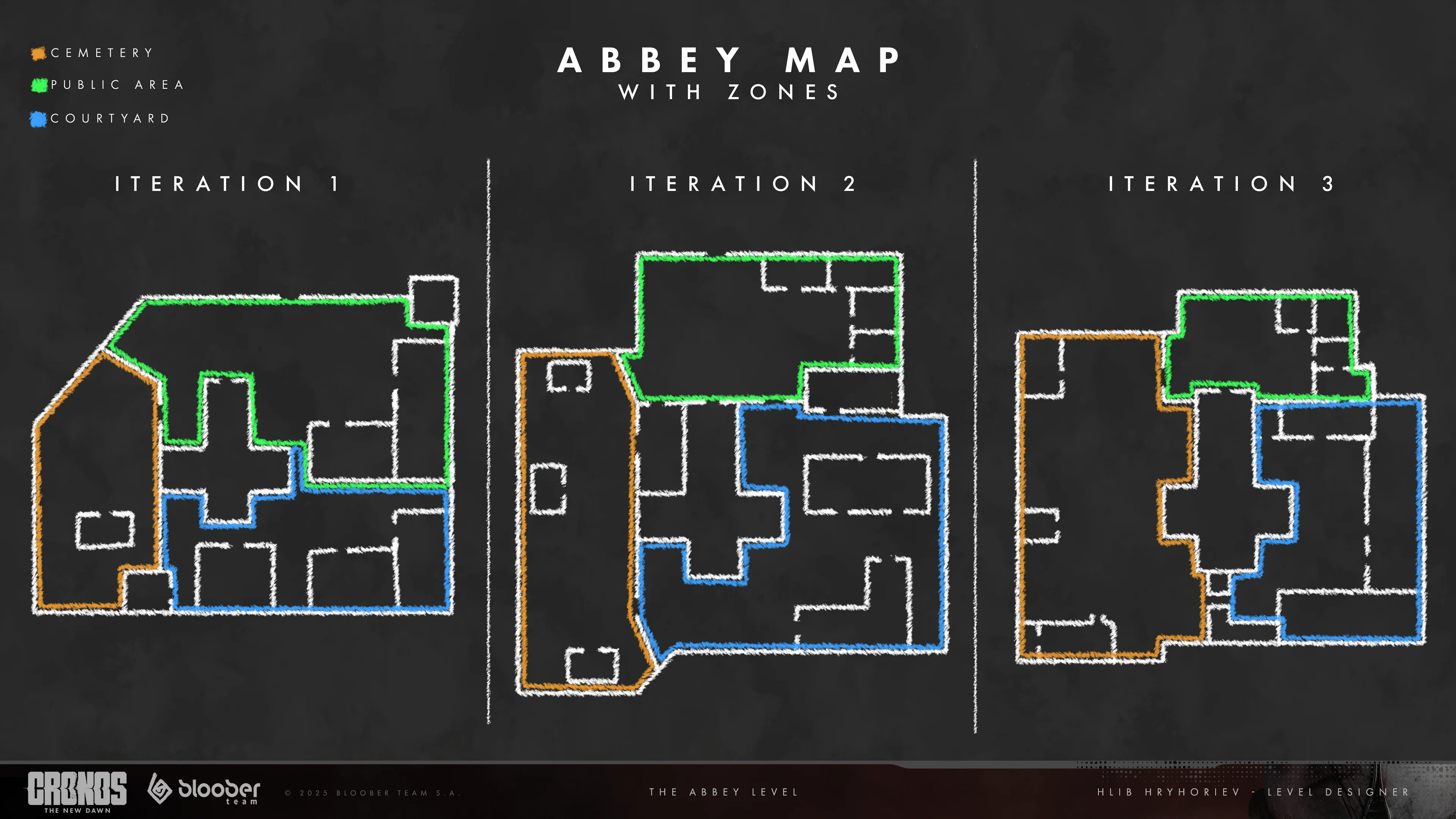
For better support of the layout I designed the abbey around a hub in the bell tower, which has a stash, save and upgrade stations. The layout loops around the hub, so that the player naturally finds it and then returns to it on multiple occasions by following the golden path.
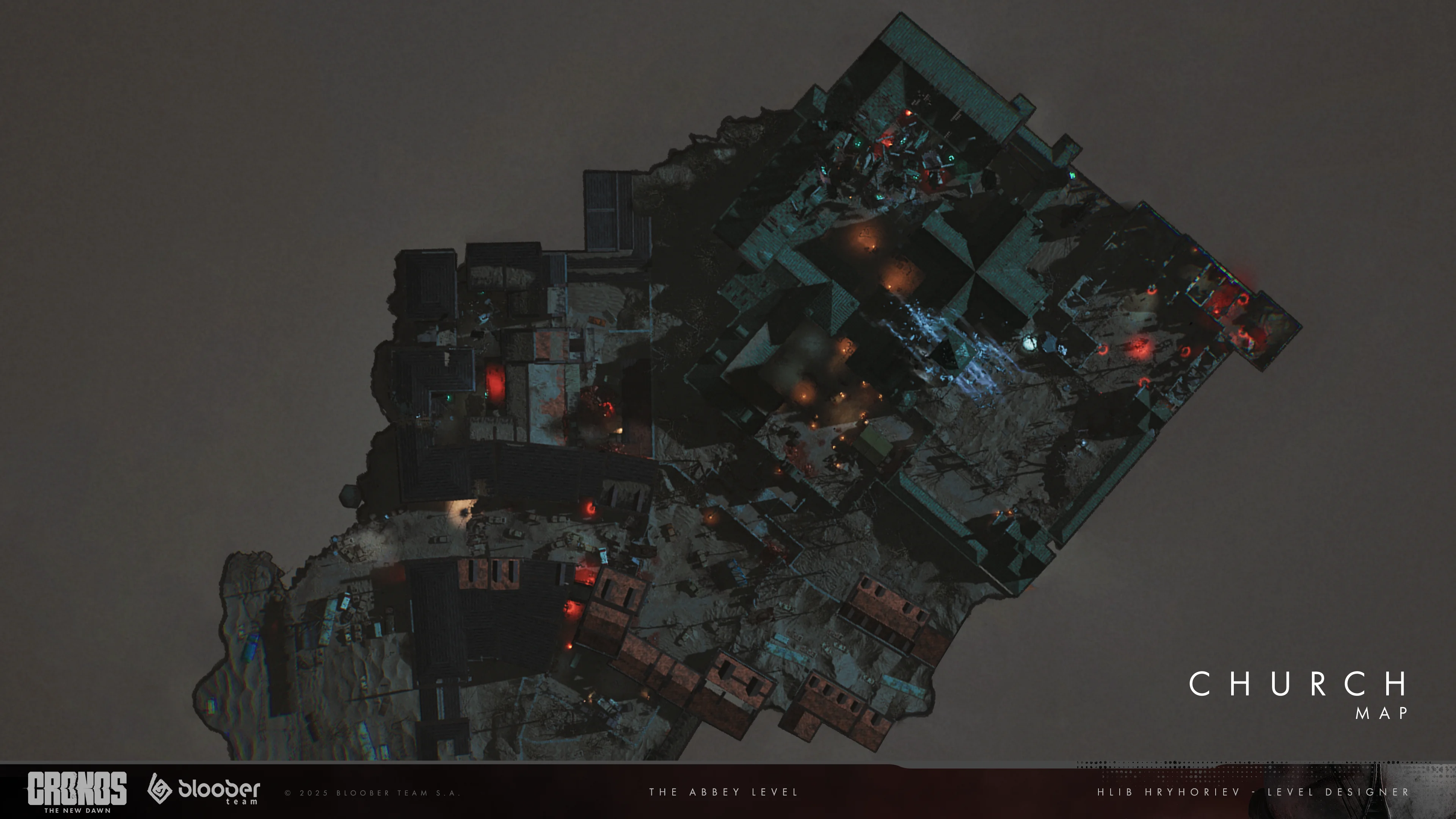
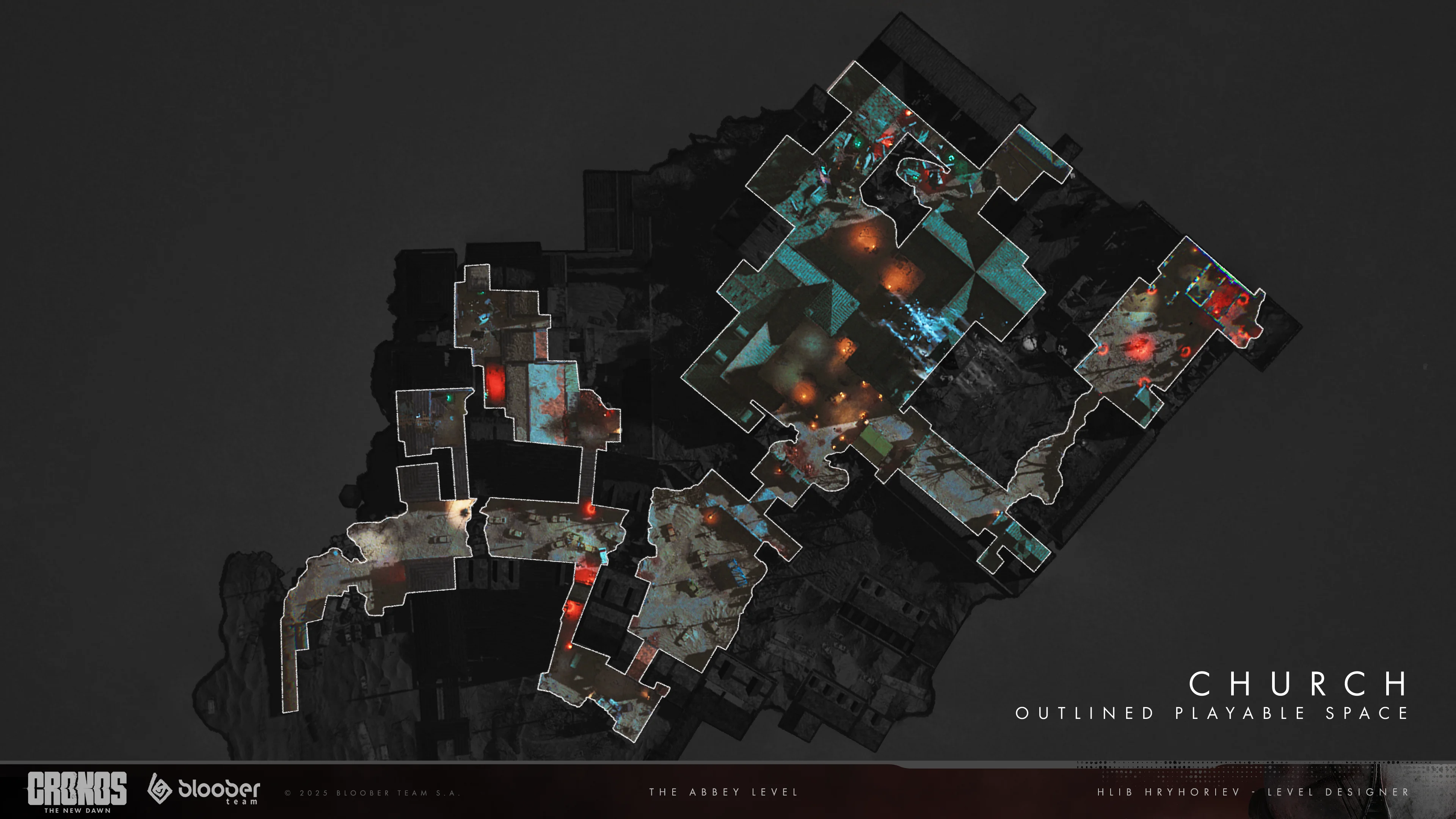
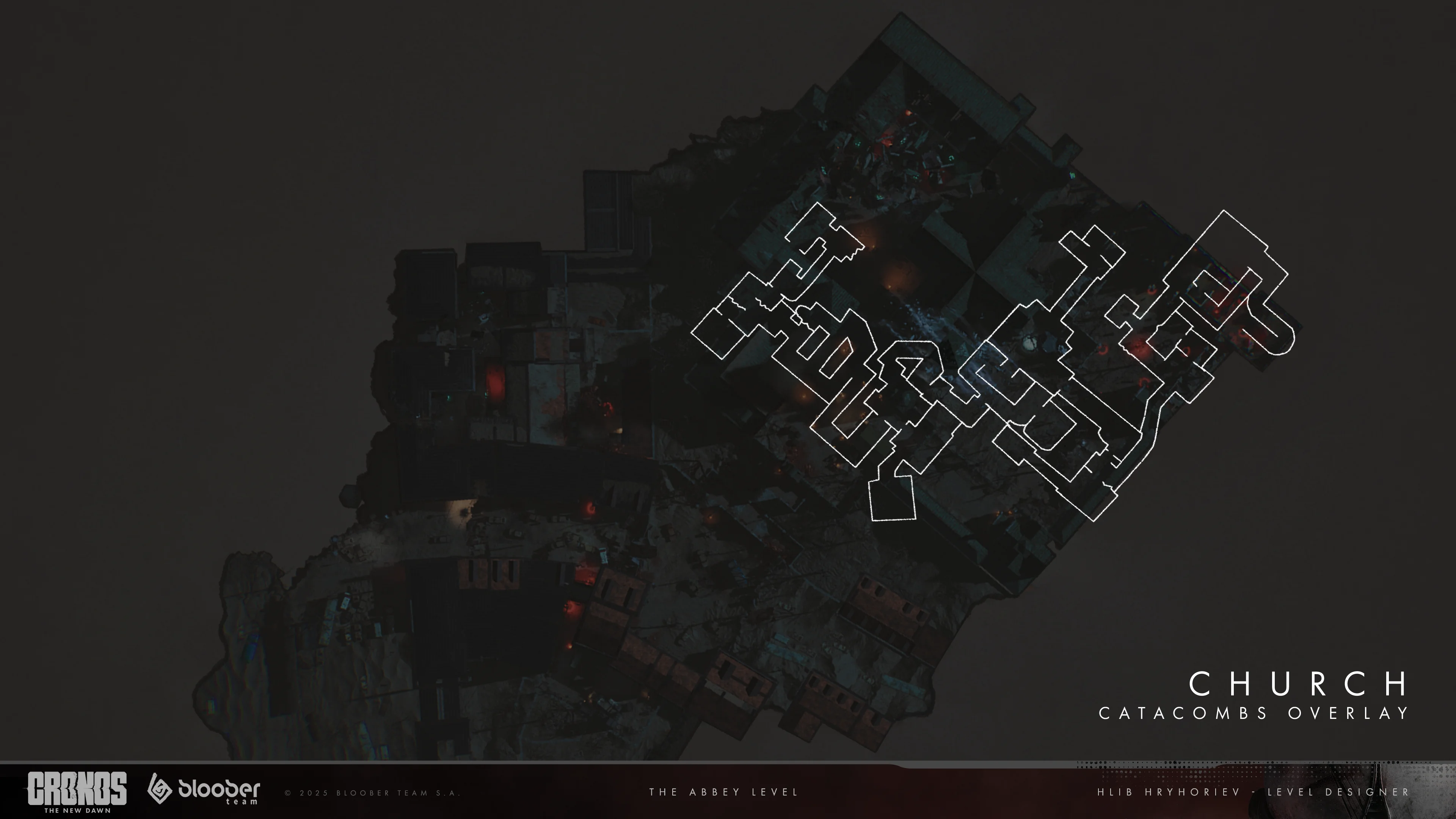
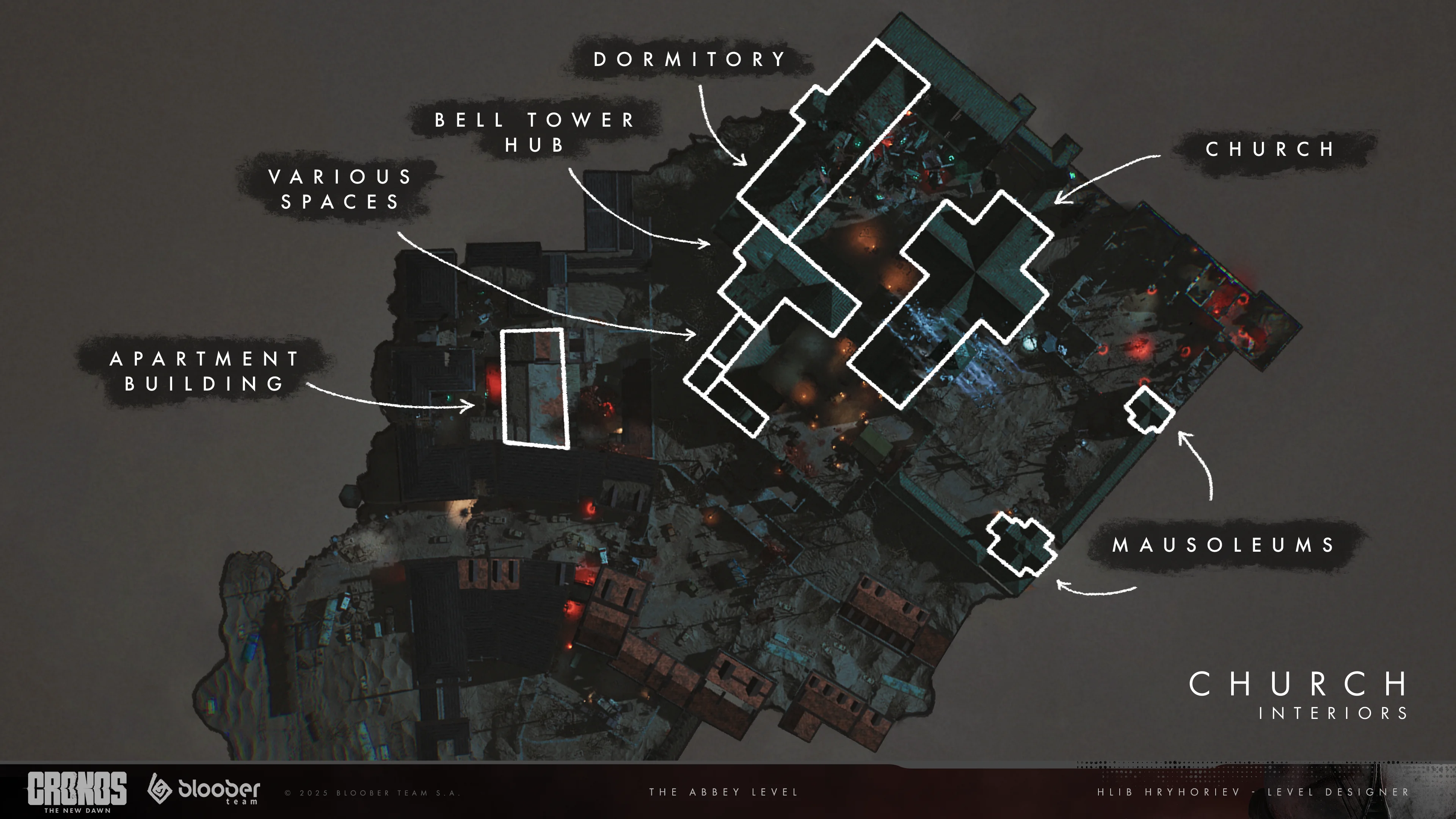
Designing the catacombs was an especially engaging challenge for me: the layout had to feel both believable beneath the abbey's footprint and rewarding to explore. The primary design challenge was striking a balance between a mostly linear layout and design that invited cautious navigation and discovery, while being more narrowish and tense than the abbey on the surface.
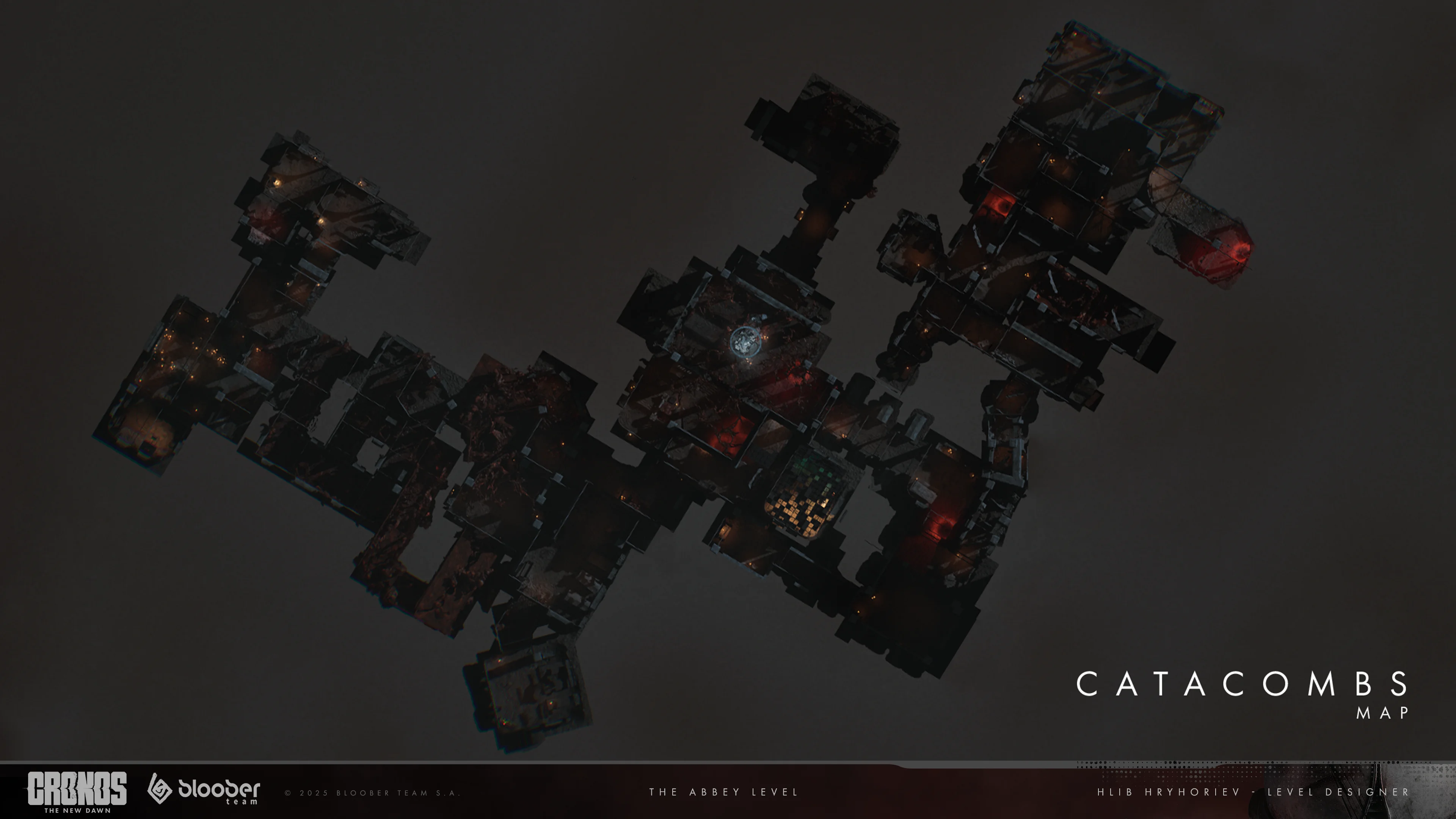
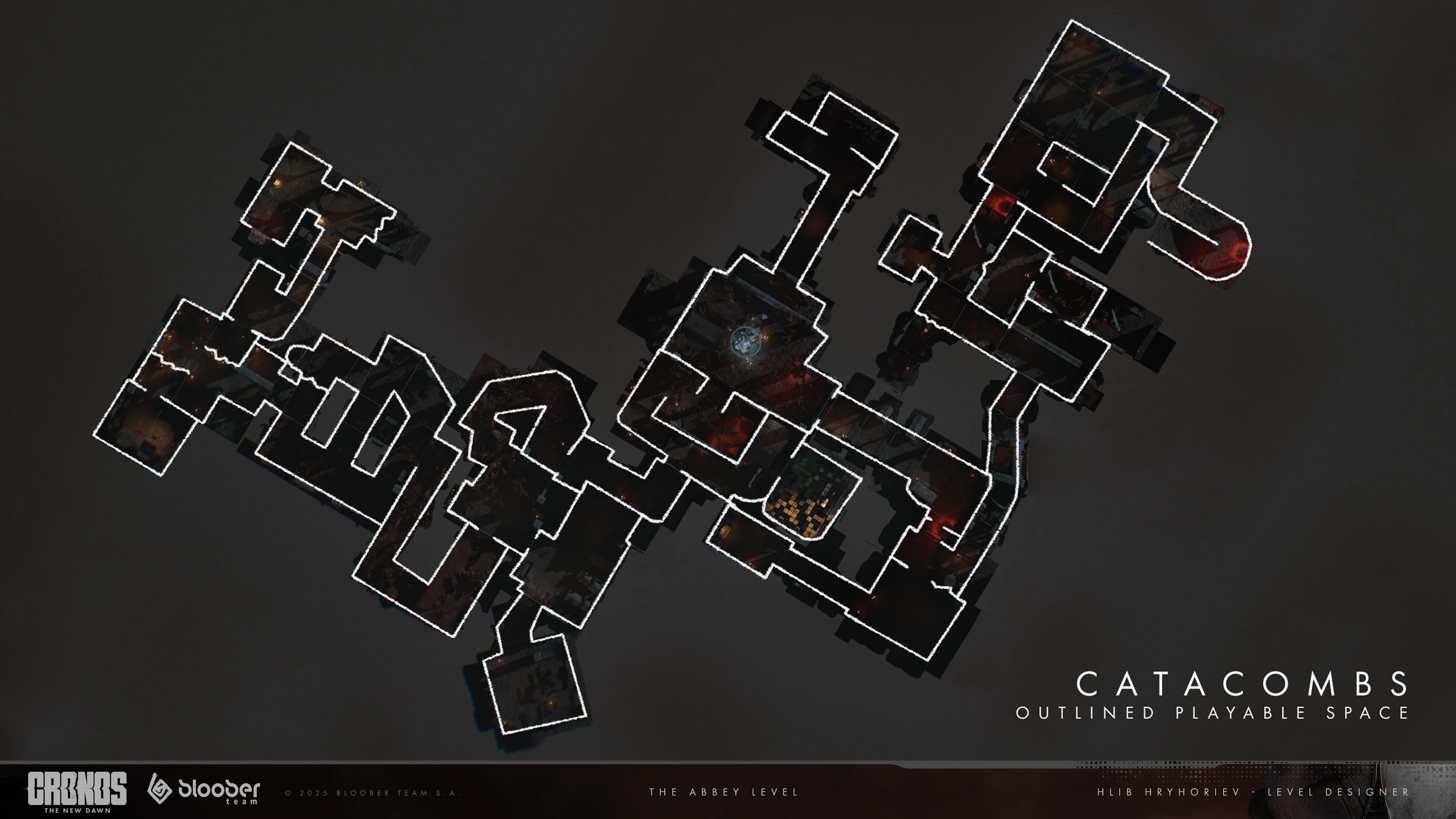
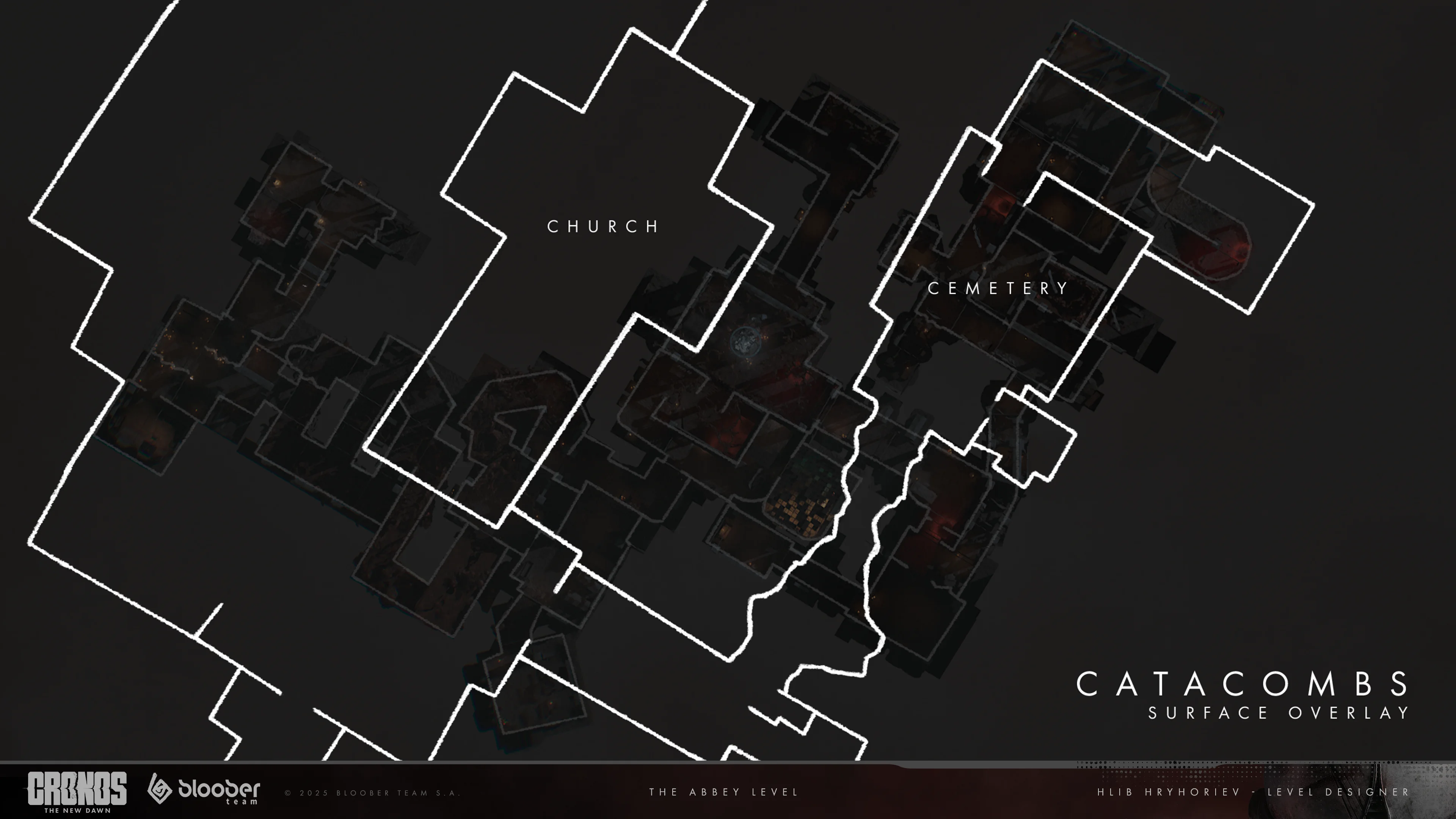
Despite real-life catacombs being a very compact space with low ceilings and tight corridors, I've added verticality to select rooms to break up the spatial monotony. These taller spaces served as visual centerpieces and were part of more difficult and elaborate encounters.
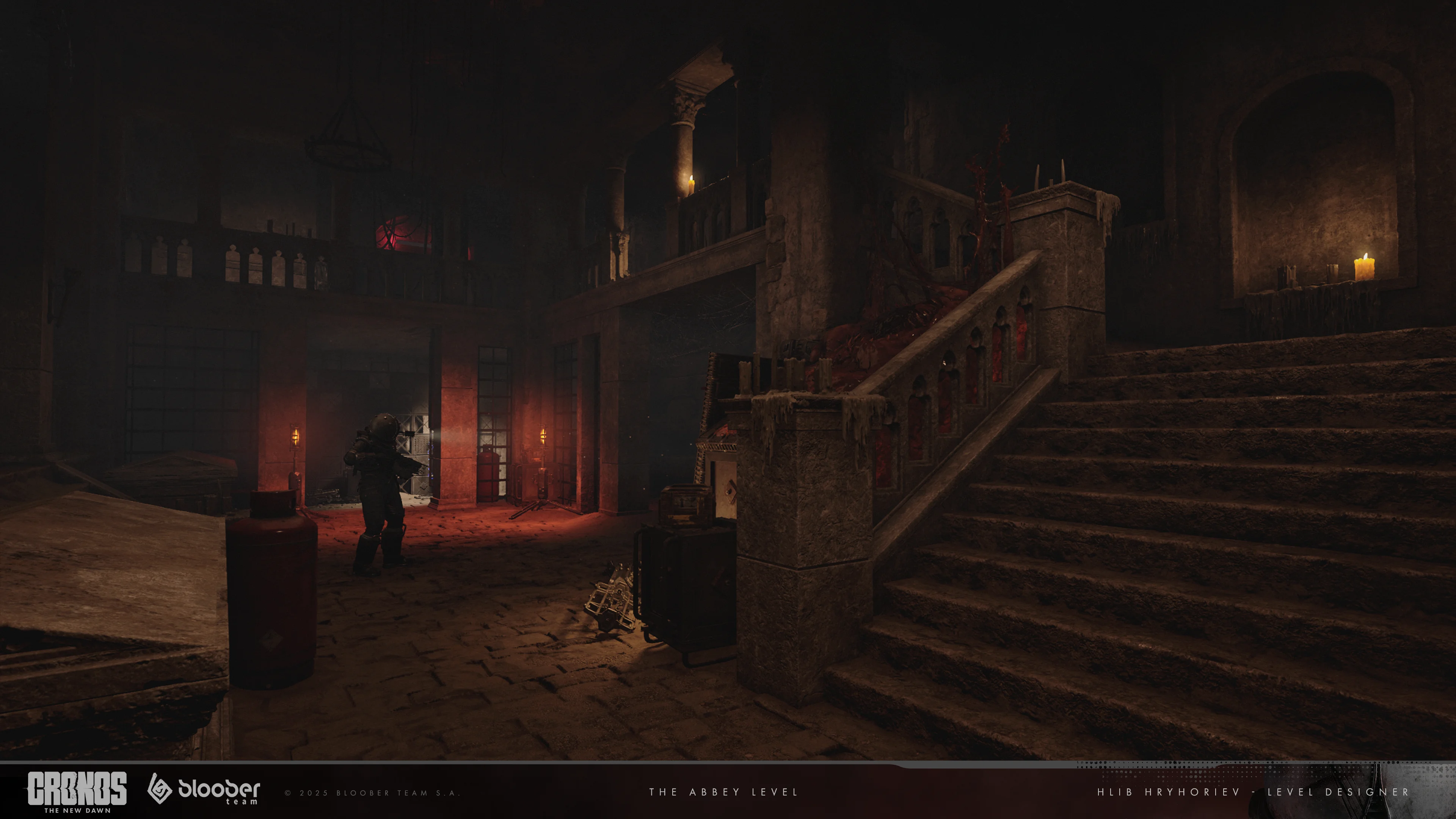
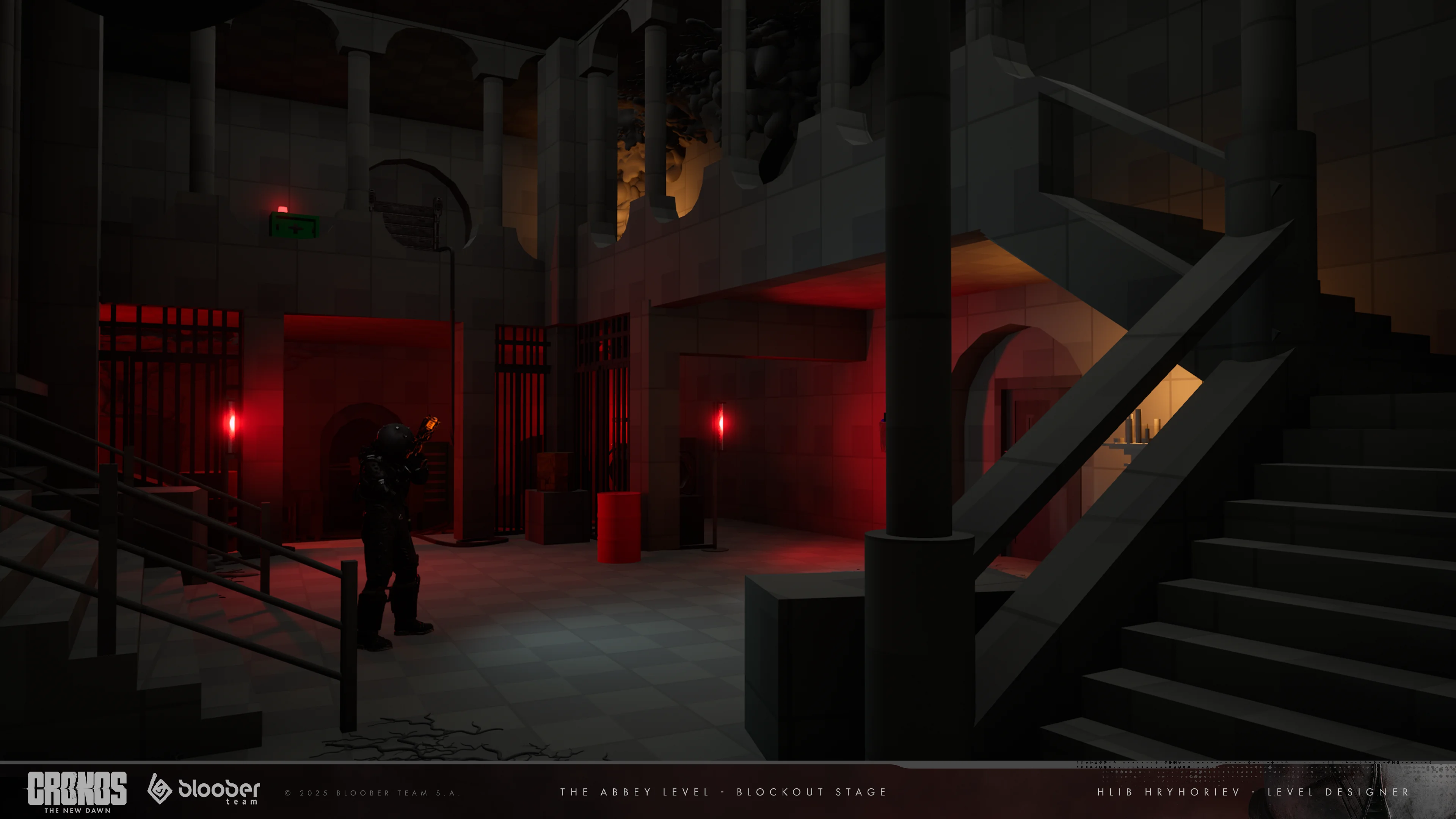
During the blockout phase, I also designed combat spaces and scripted enemy encounters. Later during production, a talented combat designer Sebastian Chavez joined me and together we worked on further iterations of the encounters, ensuring that pacing and difficulty were spot on and layouts were adjusted to support the combat scenarios.
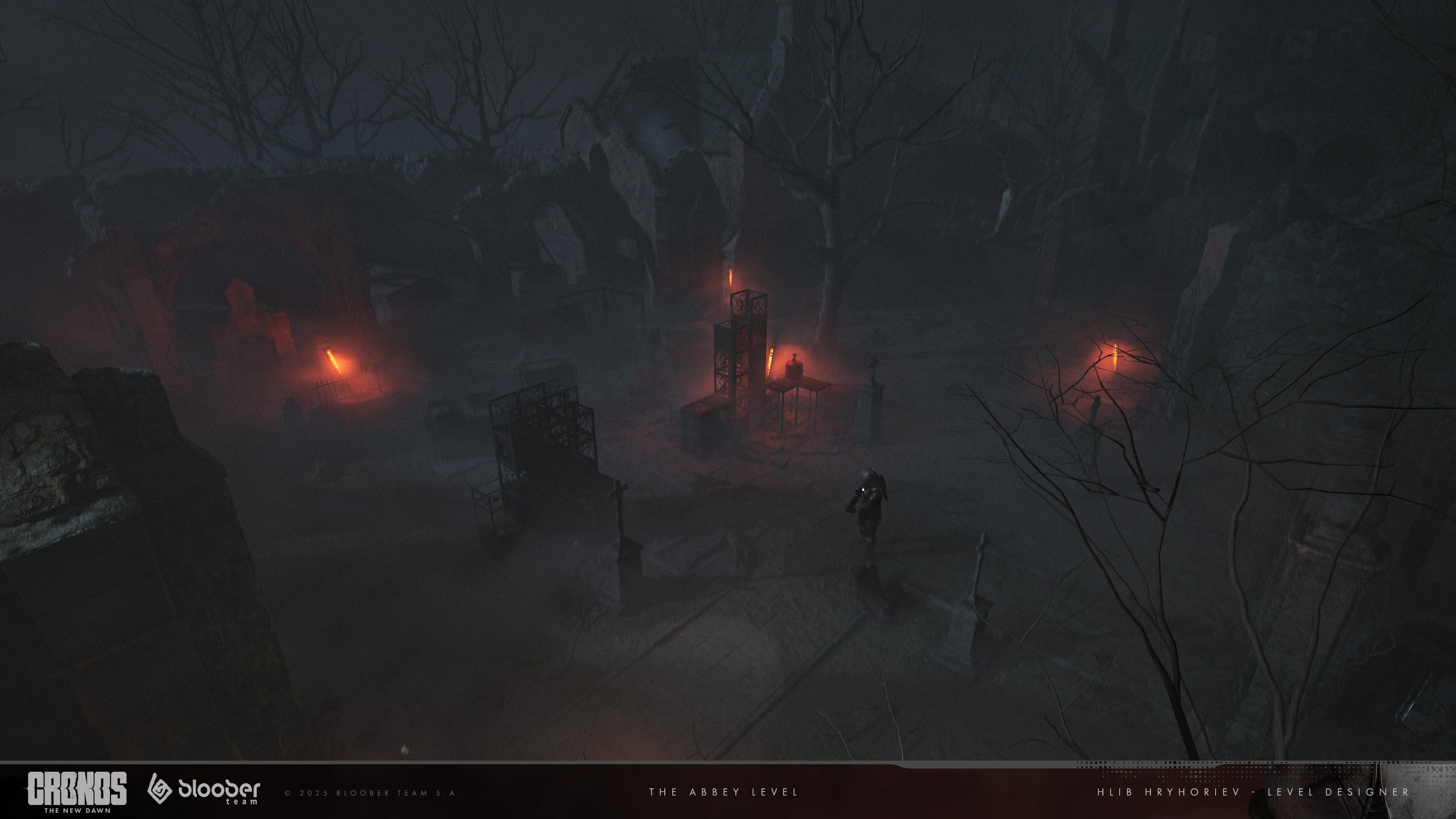
I was lucky to work on one of the more unique bosses in the game - Elisa. I worked closely with the combat designer to ensure that the arena layout supported the boss's mechanics, behavior and pacing. The goal was to create a space that not only challenged the player mechanically but also gave him enough agency and freedom.
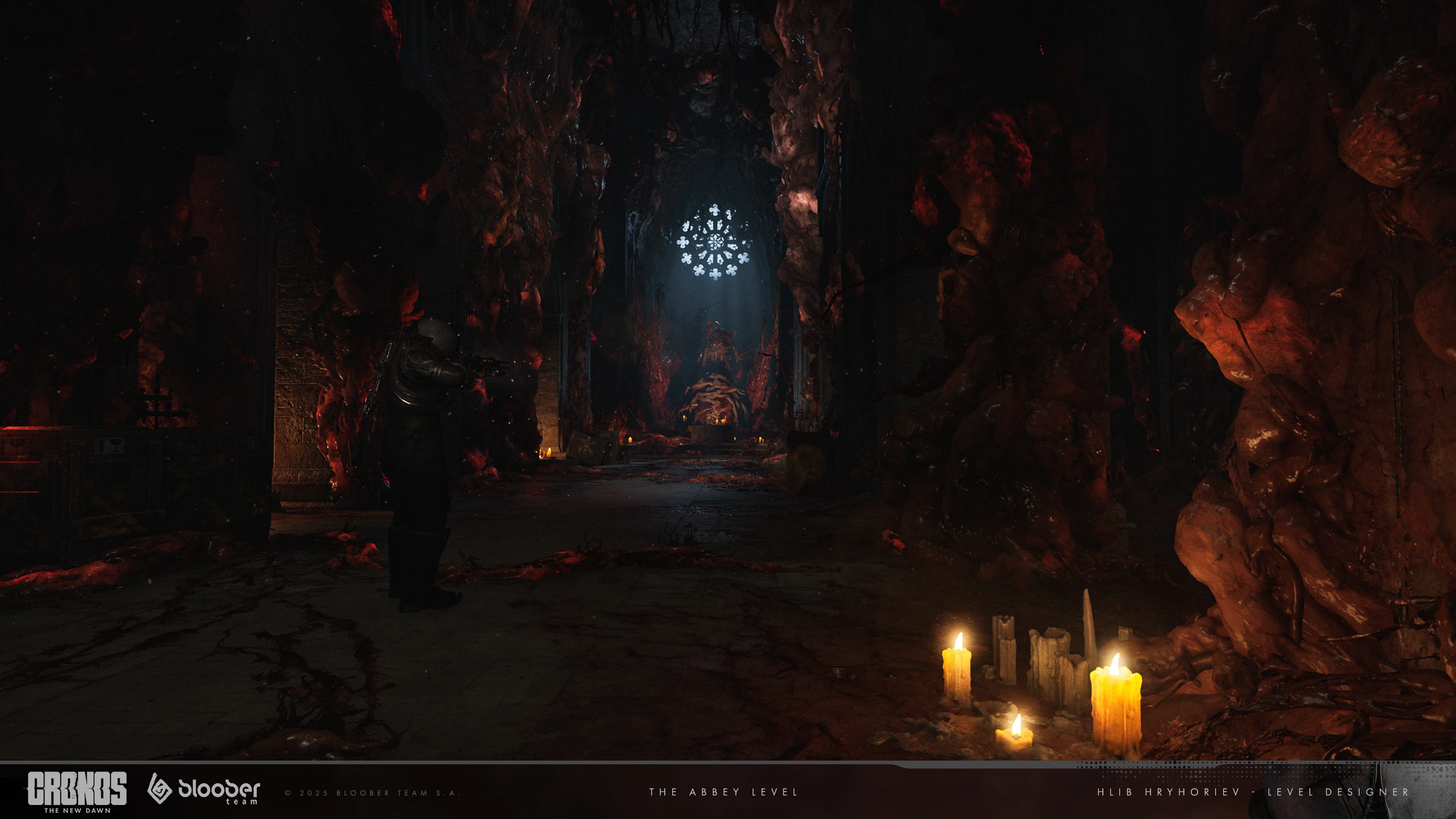
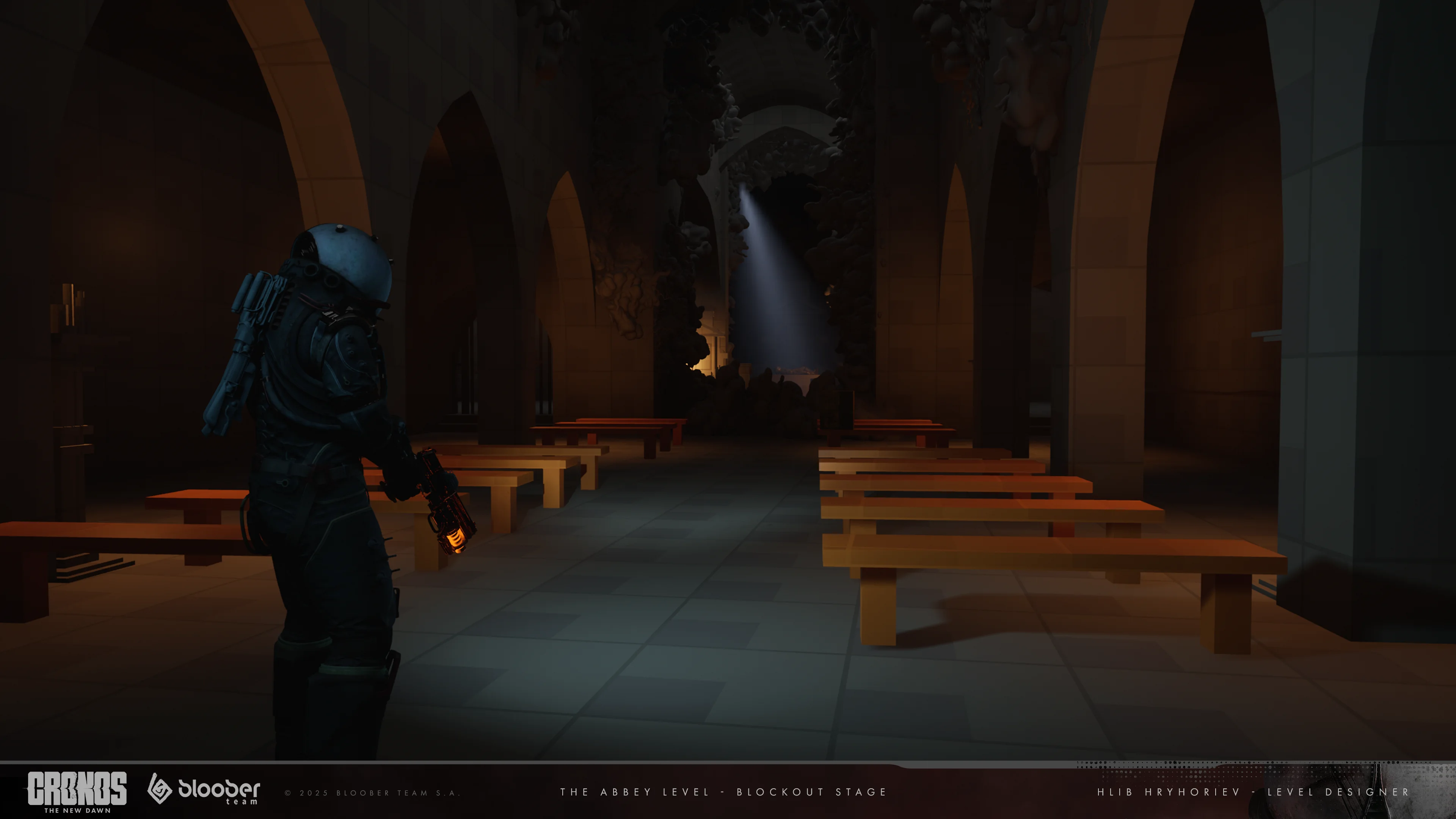
Despite challenges during development I am very pleased with how the level turned out. It was a pleasure working with my team on this level and I was very glad with the response from the players to the level.
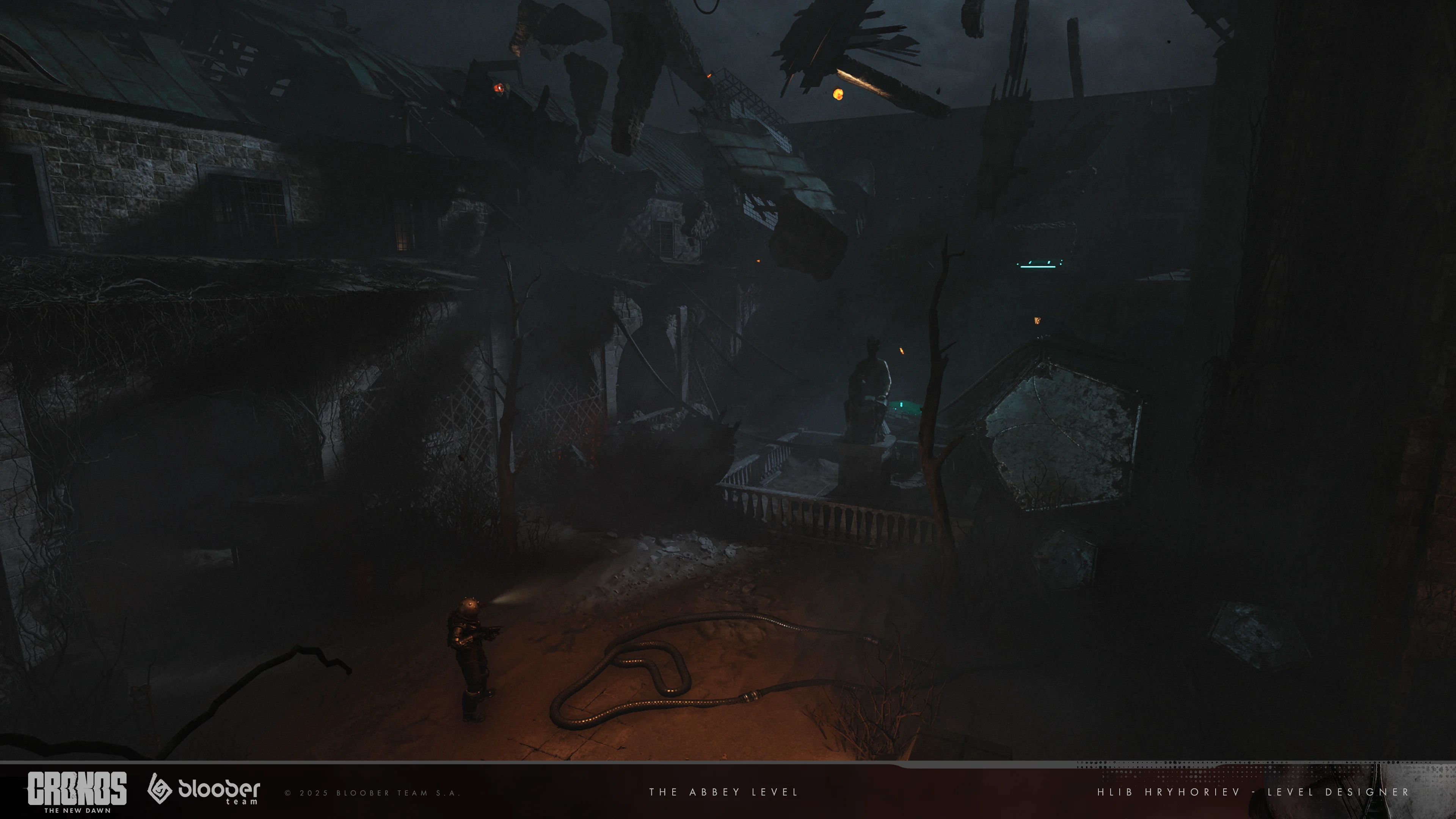
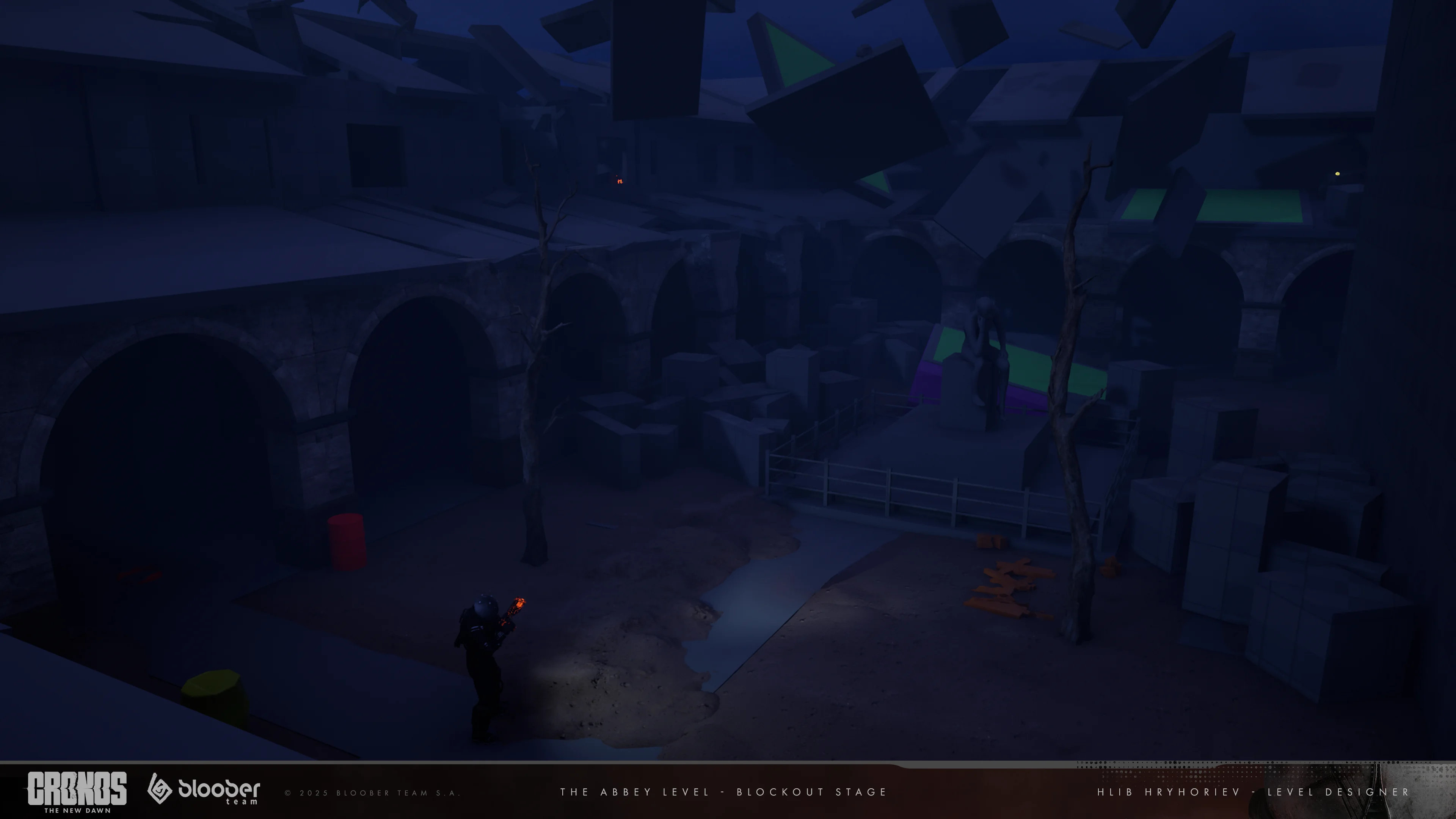
Here you can watch a level design showcase video with a comparison of the blockout stage and final level with a sneak peak on how the game looked before the art pass.

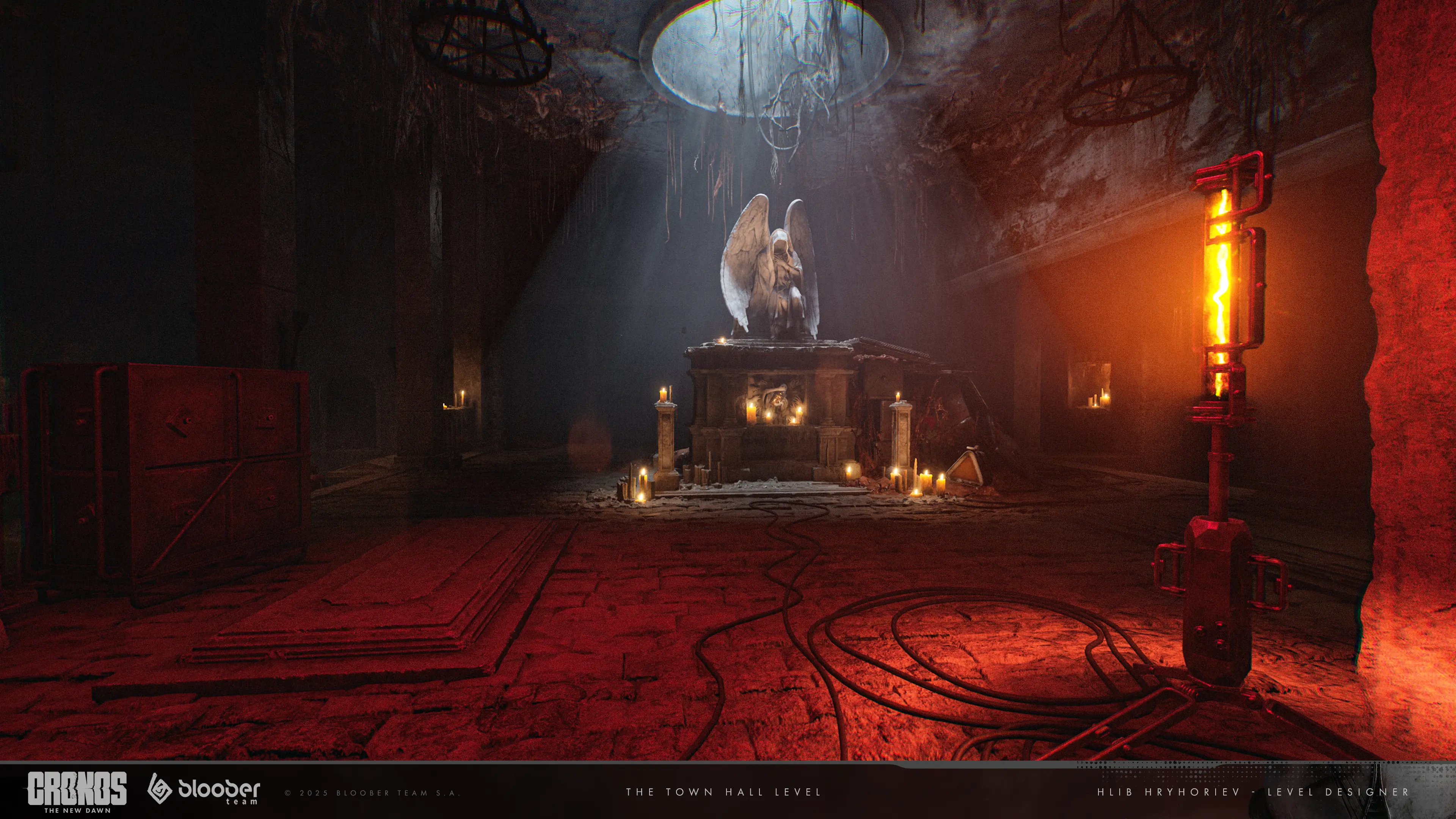
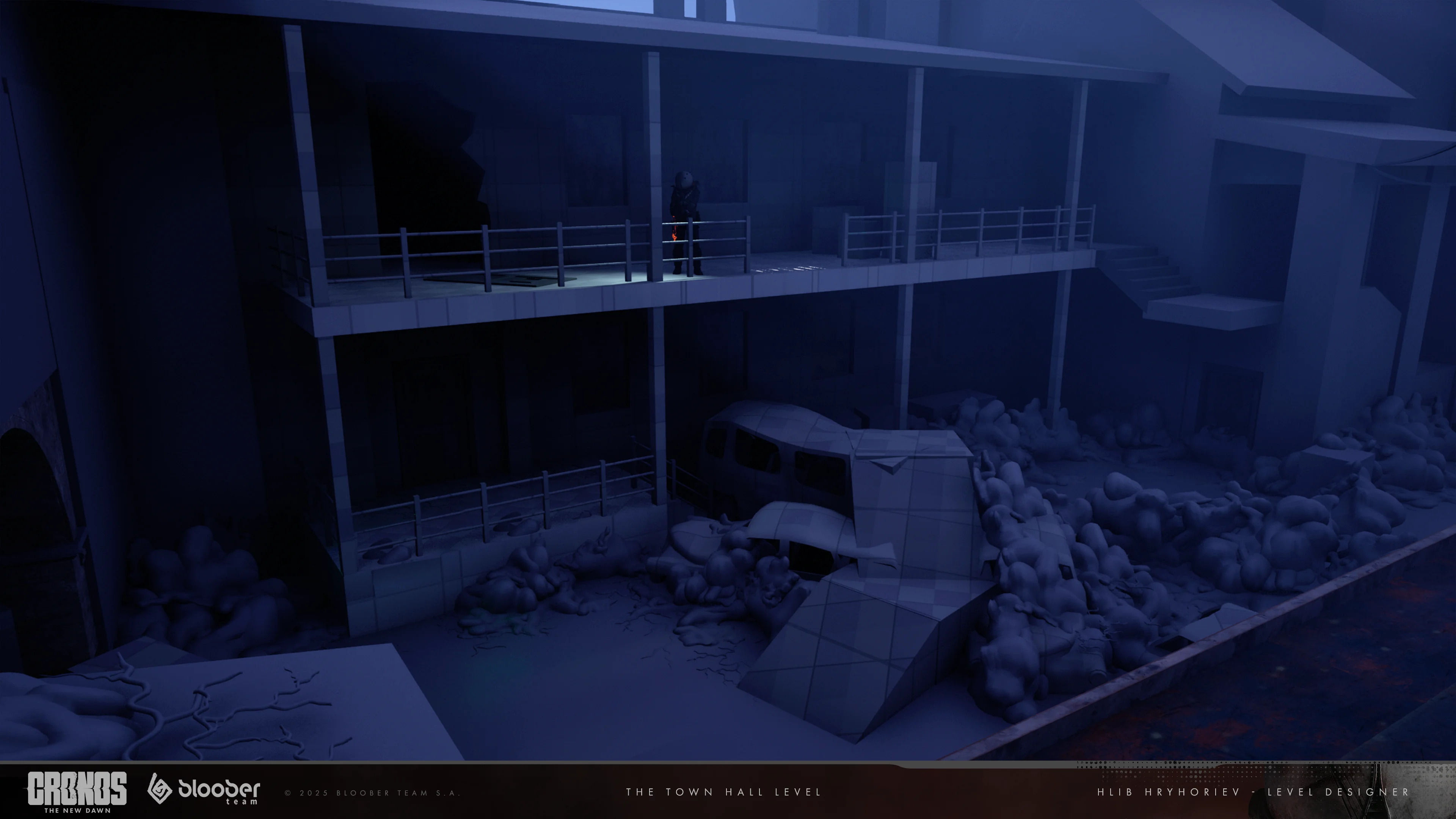
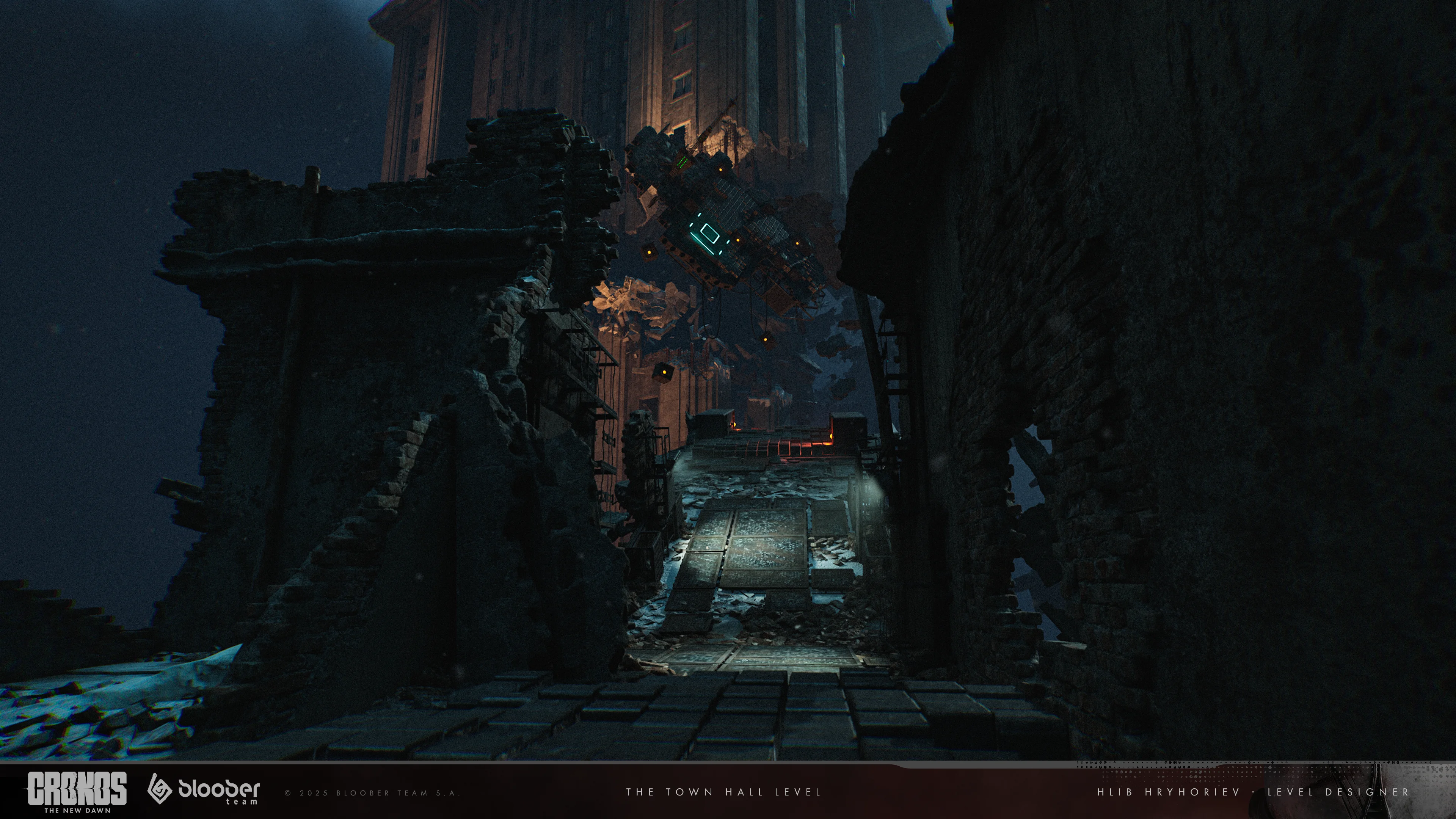
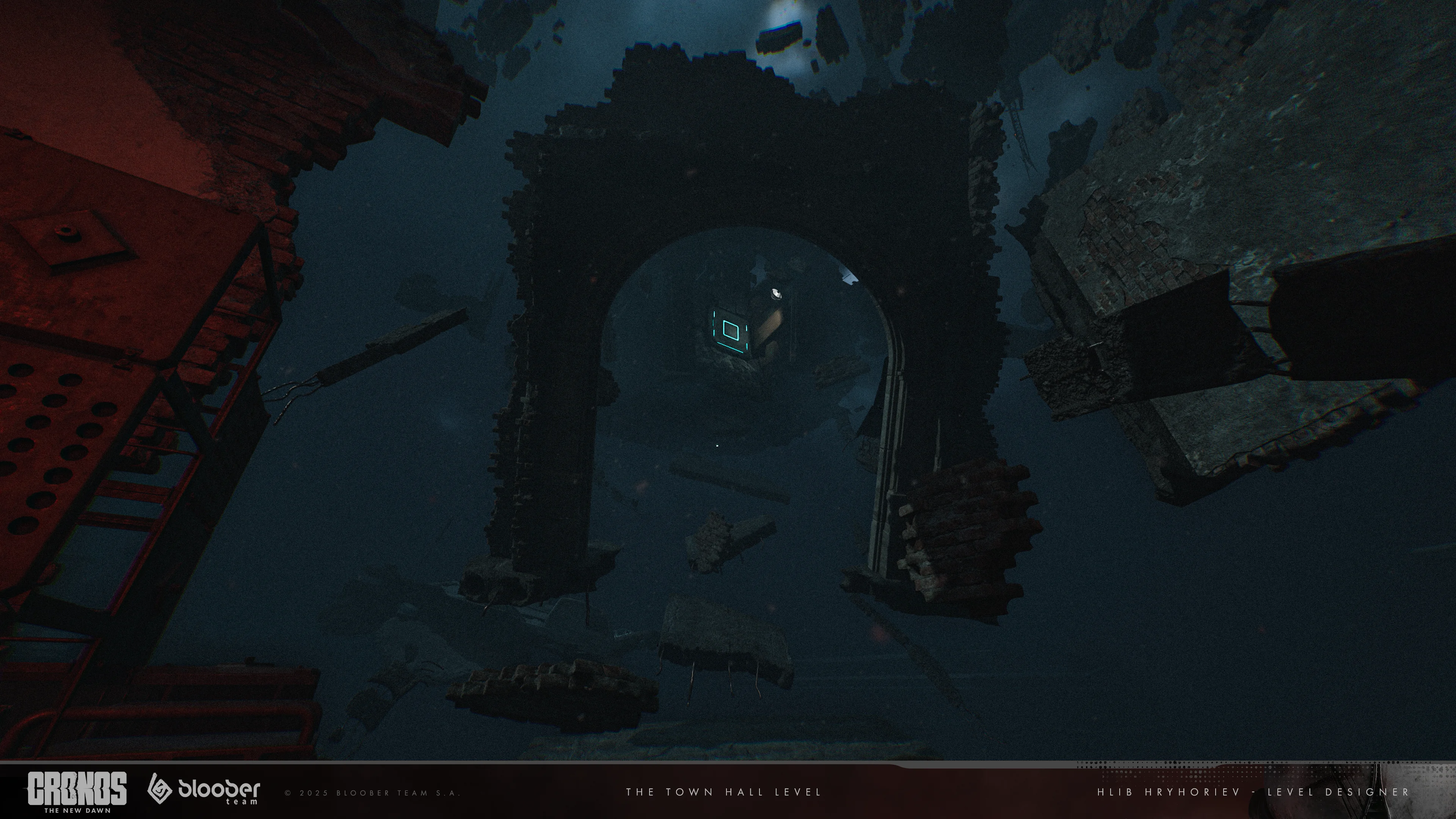
Town hall level stands in contrast to the Abbey: it's much shorter, entirely linear, and heavily narrative-driven. However, the core challenge with the Town hall is that it was built around the gravity jump mechanic. Most of the player's time is spent in mid-air, leaping between floating debris and fragments of destroyed buildings.This required me to focus on readability of jump paths and maintaining spatial clarity in a disjointed, fragmented environment.
The incredible team members I was lucky to work closely with on this level were:
Szymon Jon and Michal Kozub - QA Testers
Iga Ewa Smolenska - Narrative Designer
Jan Cieplic and Pawel Krolak - Lighting Artists
and many other wonderful developers.
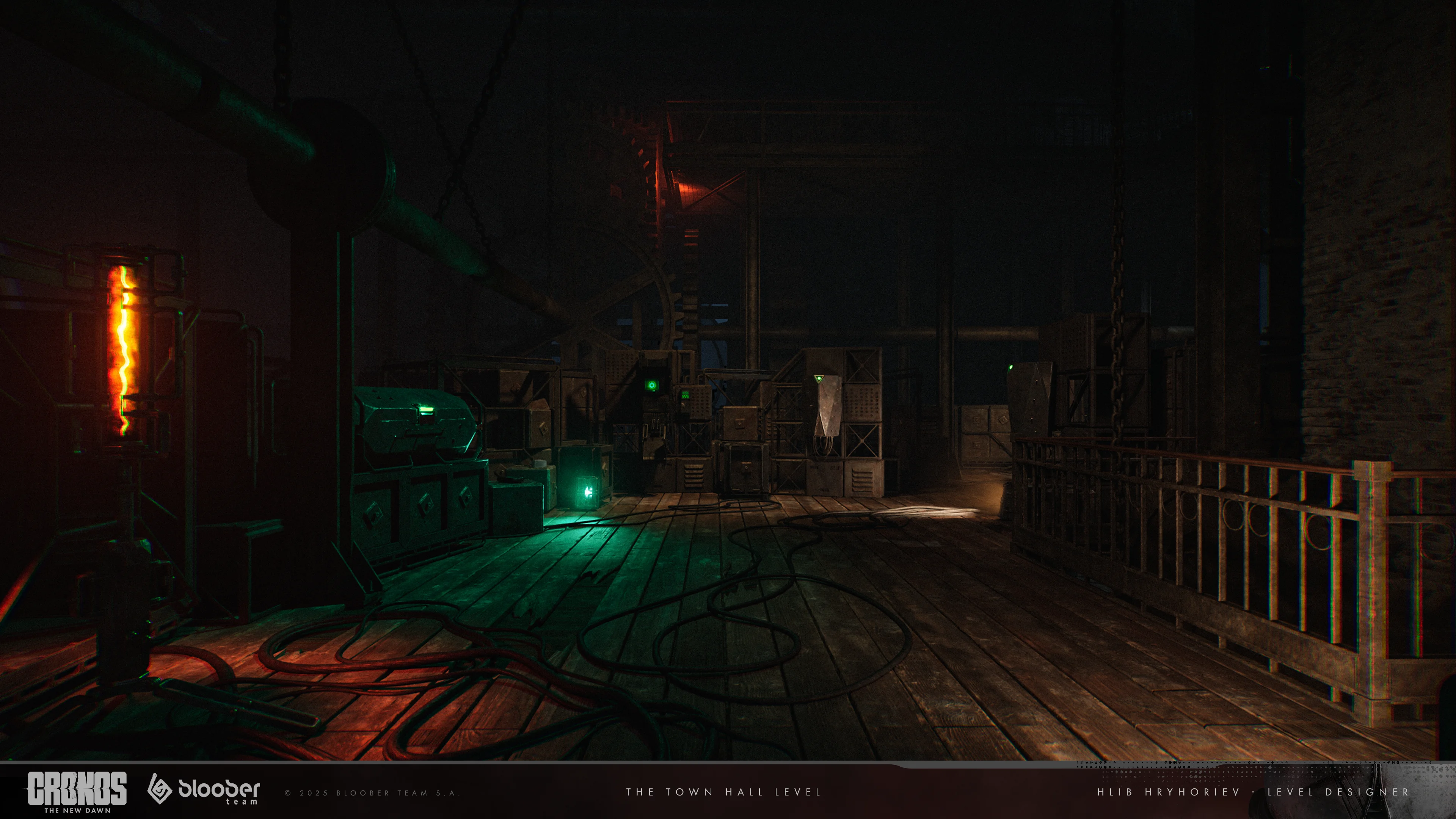

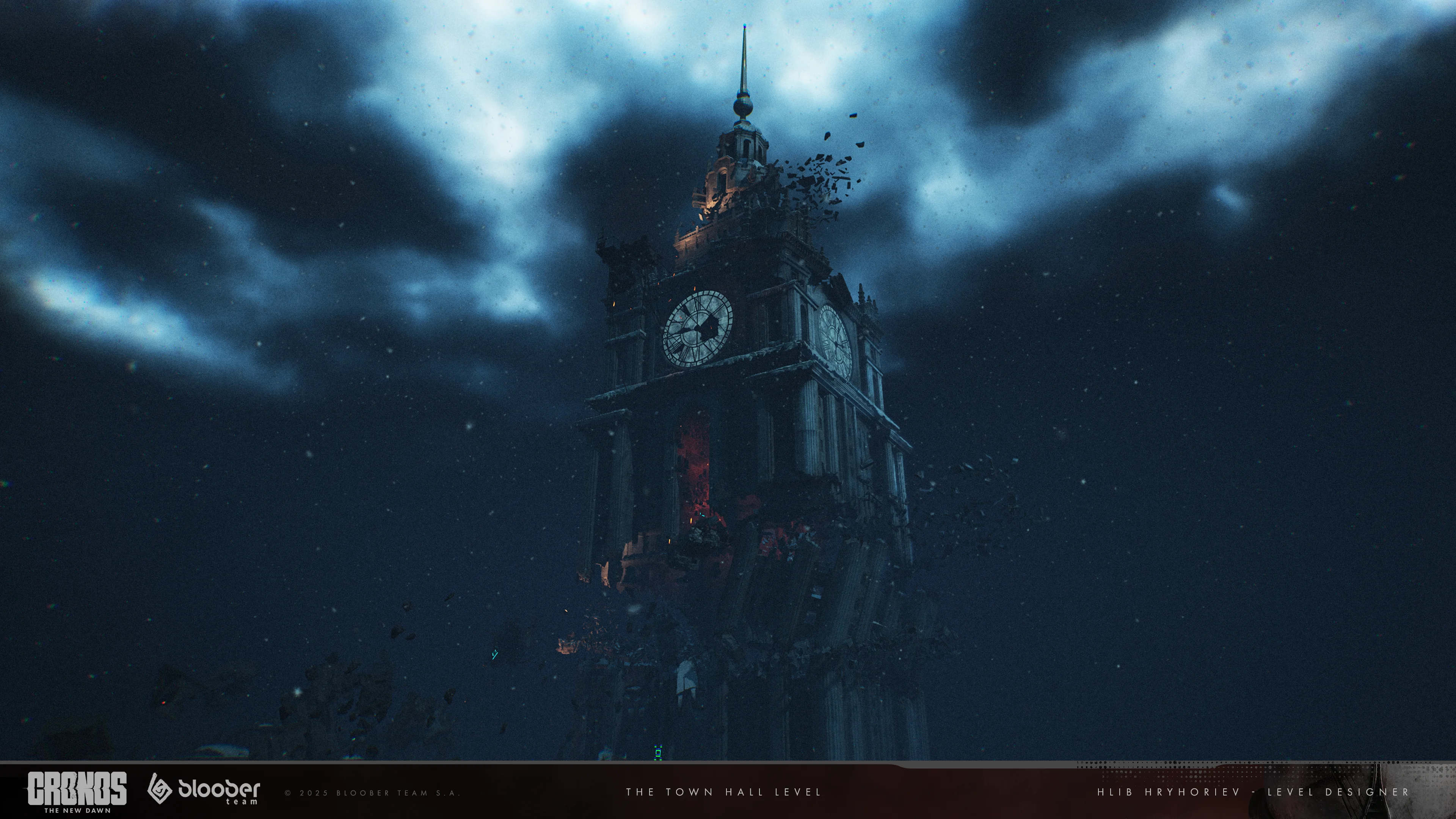
Town hall serves as the game's final level, designed to escalate the narrative and emotional stakes to their peak while serving as a remainder of the important plot points from previous levels. Traveller enters this level by jumping into the time oddity left by the Pathfinder character and finds herself in the final days of human civilization. Now the Traveller must climb to the top of the Town Hall building, to the Clocktower to confront the Pathfinder in the final boss fight.
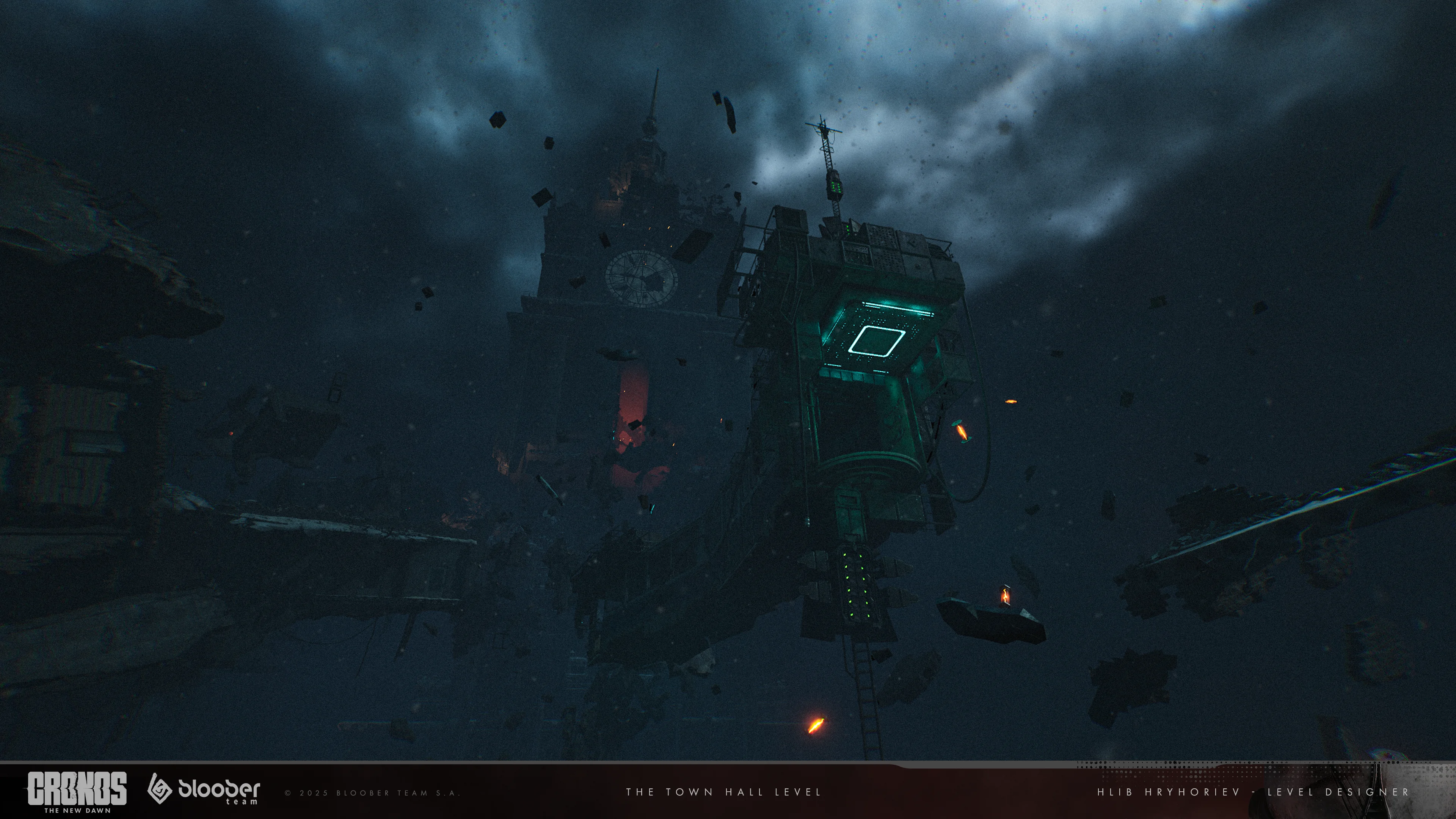
During the ascent, the Traveller hears the voices of the captured “essences”, torturing her more and more as the veil over the story's mystery is gradually lifted. Her sanity is more fragile than ever, and she is constantly haunted by disturbing visions. Past and future bleed into one another in her mind, creating a sense of psychological disorientation.

It was particularly hard to create a 2D layout for the gravity sections, since the player often moves vertically or at steep angles, making a traditional top-down view much less useful. That's why I only pre-planned the key “platforms” that carried the heaviest gameplay moments.
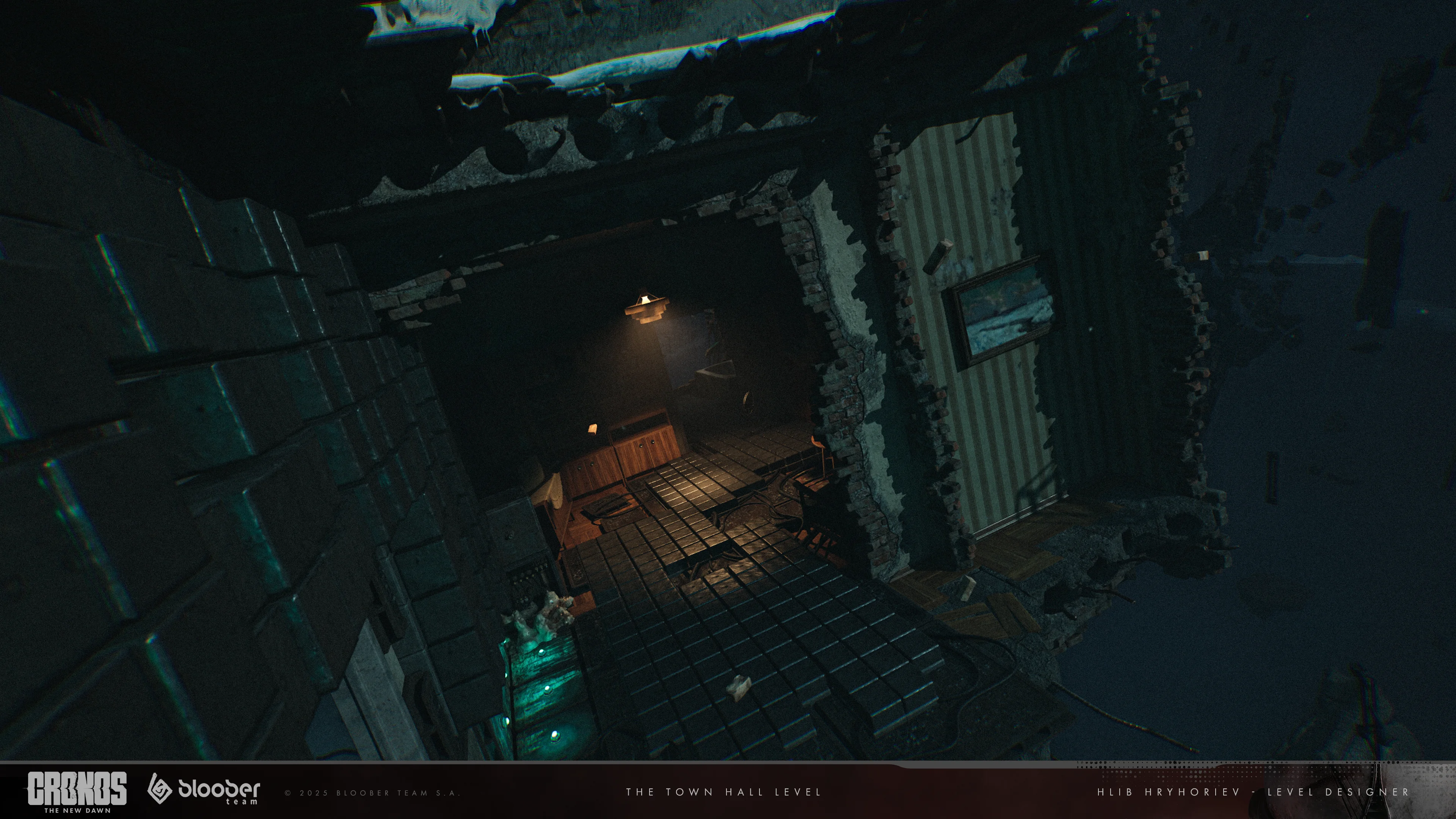

From a level design perspective this level is a roller-coaster linear corridor, which is mostly focused on delivering key narrative bits. The layout intentionally enforces the sense of urge , encouraging players to rush through the environment.Aside from a few carefully placed instances there were no combat or environmental traps for the player to stagger upon.
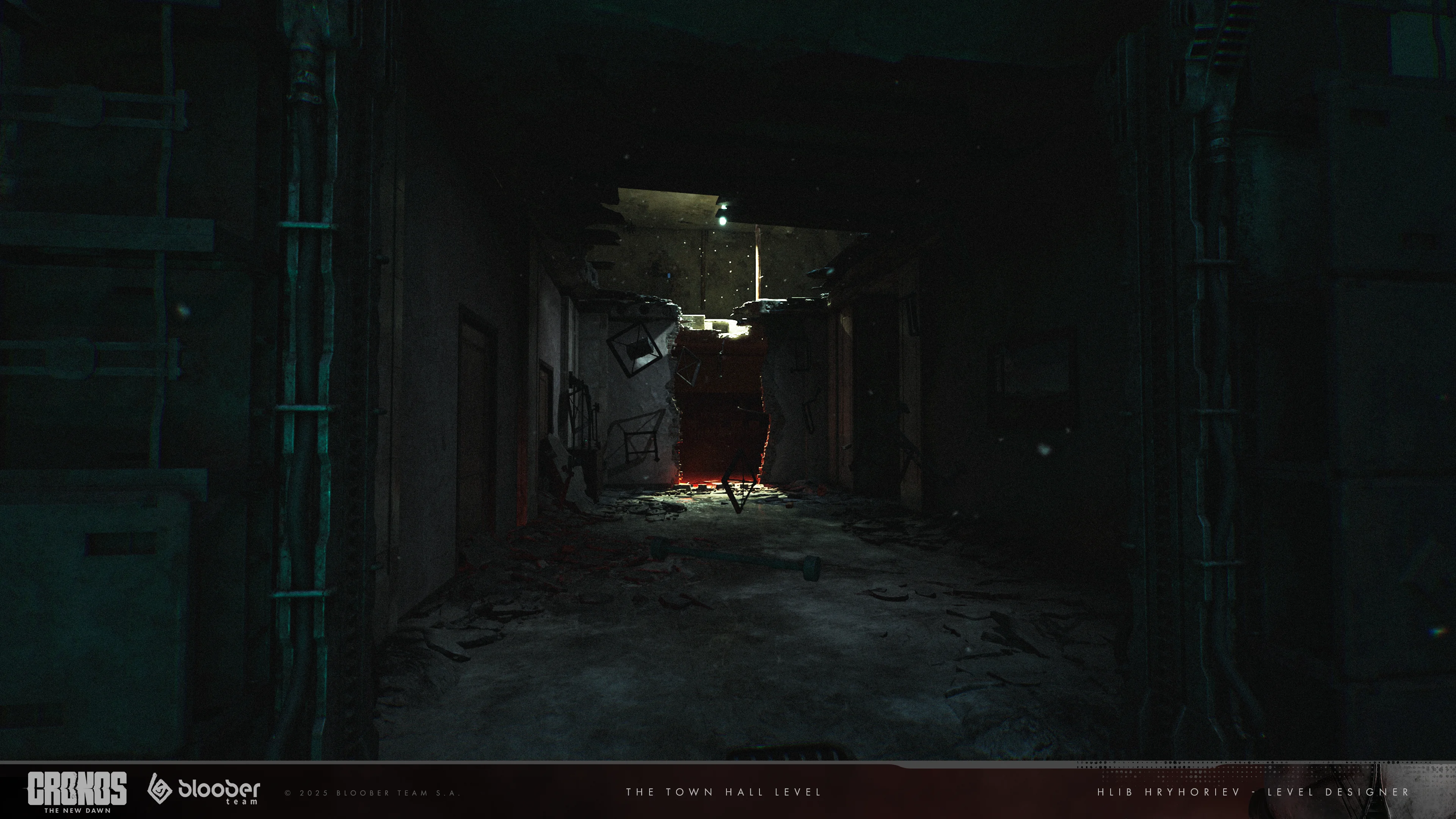
One of the main challenges in designing this level was making the traversal through it as smooth as possible for the player. I addressed this through a combination of guiding lines, lighting setup and placing visually standing out shapes that act as visual entrances, naturally drawing the player toward the next section.
Cronos: The New dawn - Steam page